
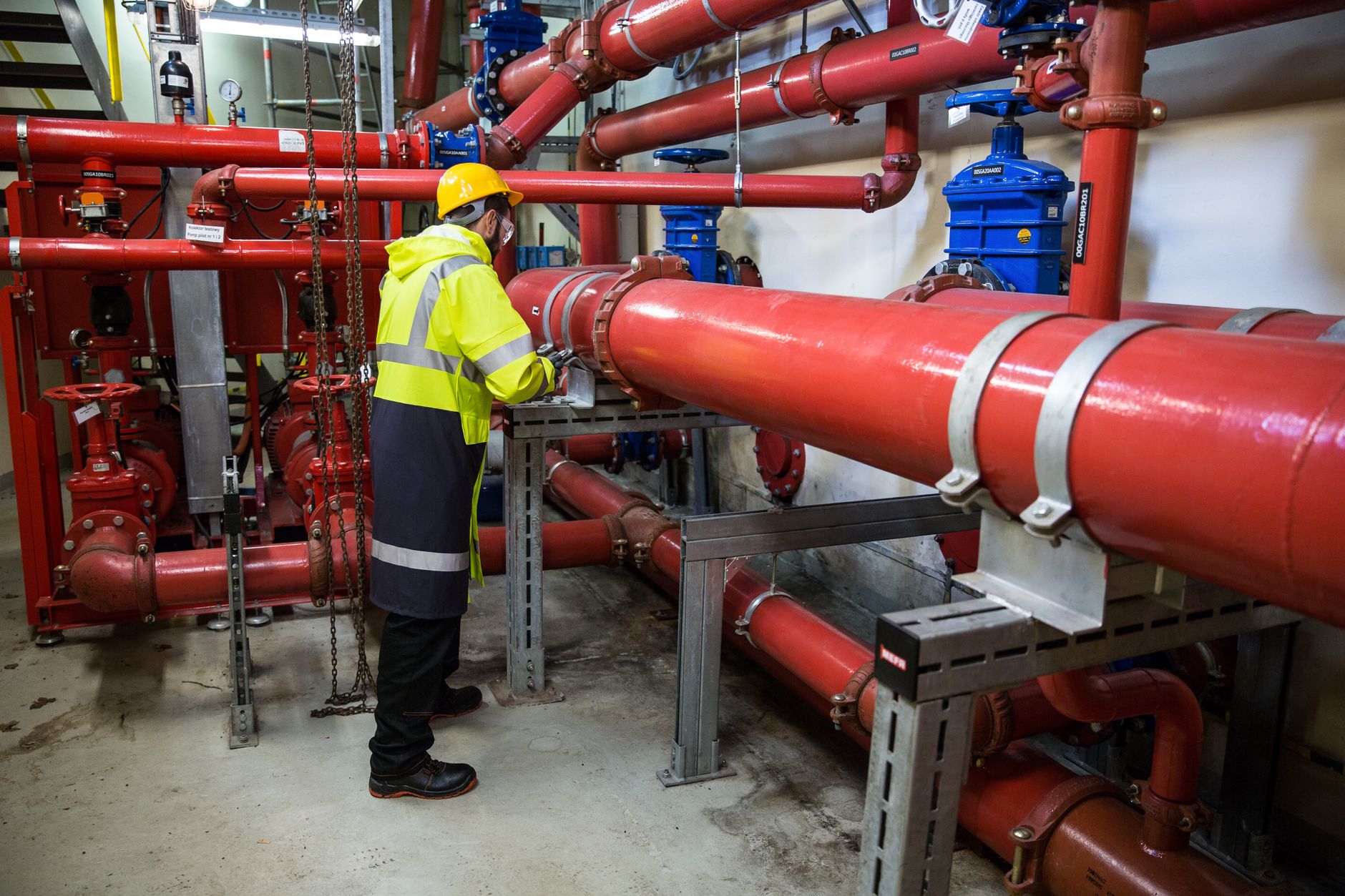
Infrastructure reliability, energy efficiency, and process safety – these are all demands of today’s industry. All over the world.
One area that combines these requirements is pipe engineering. However, if you think that designing piping systems is simply about selecting pipe diameters and materials, stop for a moment.
- What exactly is pipe engineering and why is piping design so important?
- How does piping engineering help reduce risk during operation and installation?
- Why are piping engineers increasingly using digital design?
Piping engineering must take into account operating conditions, pressure, temperature, the properties of the media being transported, the location of equipment, and subsequent operation and maintenance. We’re writing about that!
What exactly is pipe engineering and why is piping design so important?
To fully understand the topic, it’s necessary to clarify what pipe engineering actually is – it encompasses the entire process from system concept to fabrication and installation. As part of each project, piping engineers and teams of piping engineers analyze the system layout, select materials, and prepare piping isometric drawings, which serve as the basis for contractors. Codes and standards, defining requirements for safety, quality, and, of course, technical parameters, also play a crucial role.
This is precisely the foundation of a well-executed piping design – it must account for pressure, temperature, and fluid dynamics, and must demonstrate resistance to potential mechanical loads. Stress analysis allows us to assess how the installation will behave during operation and whether the solutions implemented will ensure adequate reliability.
It’s worth emphasizing that all of this is important in many areas: both in large industrial facilities and in more specialized plants, such as food processing.
How does piping engineering help reduce risk during operation and installation?
You surely understand that system safety depends not only on the design but also on how the installation is performed. Here’s the gist: piping engineering is closely linked to the analysis of the assembly method, the availability of individual components, and quality control. Piping isometric drawings help reduce the risk of construction errors, while codes and standards indicate the requirements that must be met at subsequent stages of work.
The installation location is also crucial. For this reason, virtually every aspect of piping must be assessed in terms of employee safety, service access, and possible future changes.
Why are piping engineers increasingly using digital design?
Finally, it’s worth noting how significantly technological advancements are transforming pipeline engineering – including pipeline design. This isn’t surprising! Digital models allow for analysis of installation layouts, collision detection, and validation of selected solutions even at the design stage. Piping engineers can thus identify technical challenges early, estimate costs, and compare materials and construction methods – so it’s impossible not to take advantage of such opportunities.
