
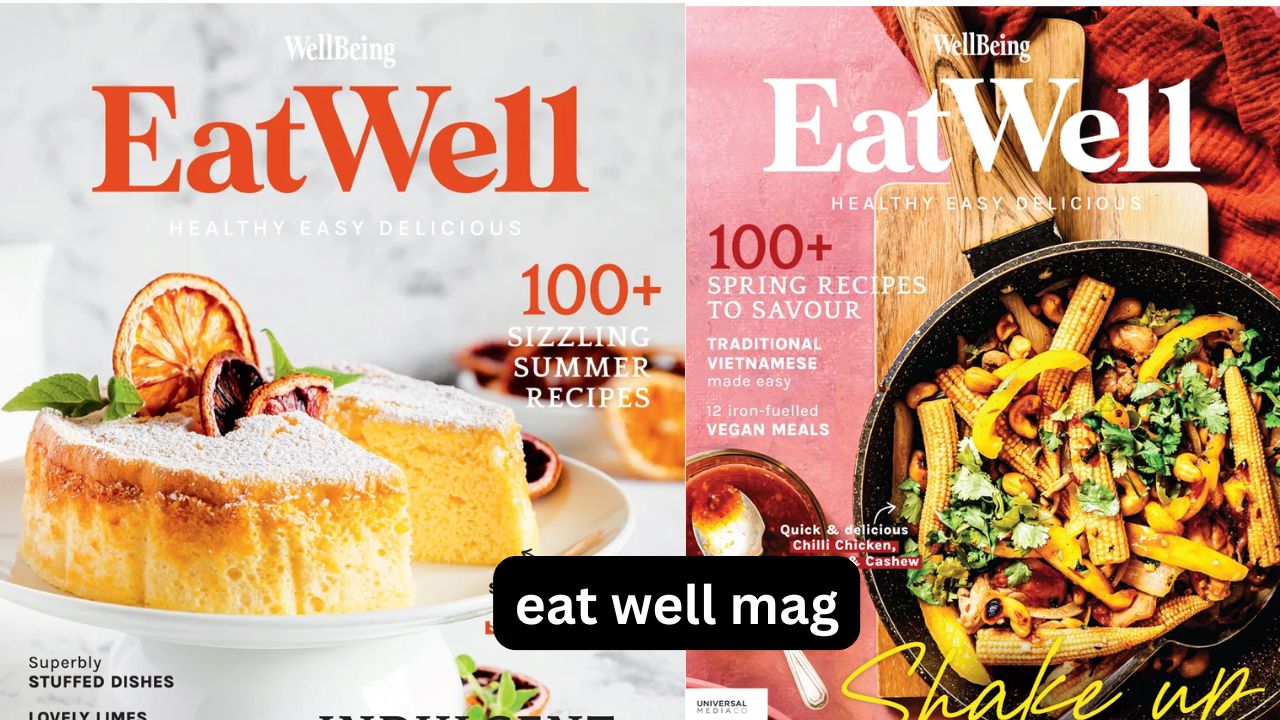
When people search for Eat Well Mag, they are usually looking for more than another collection of recipes. They want food that tastes good, fits into a busy schedule, and still supports a healthier lifestyle. That balance is what makes the publication interesting: its approach is built around practical cooking rather than the idea that healthy food must be restrictive or complicated.
The Australian Eat Well magazine has been positioned as a healthy recipe publication for everyday home cooks, combining recipes with shopping ideas and practical inspiration. Universal Media describes it as a magazine focused on healthy food, with more than 70 recipes in each edition and an emphasis on making nutritious cooking enjoyable.
This guide explains what Eat Well Mag is, what readers can expect from it, how its approach differs from diet-focused publications, and how to get the most value from its recipes and cooking ideas.
What is Eat Well Mag?
Eat Well Mag is an Australian food and recipe magazine associated with Universal Magazines and the WellBeing publishing portfolio. Its central idea is straightforward: healthy food should also be enjoyable, practical, and realistic for ordinary home cooks.
Rather than treating healthy eating as a strict diet, the magazine has traditionally combined:
- Healthy recipes
- Seasonal cooking ideas
- Shopping lists
- Quick meal inspiration
- Ingredient ideas
- Advice from chefs and food writers
- Contributions from home cooks and bloggers
- Practical approaches to everyday food
The publication has also been available digitally through magazine platforms, with issues listed as Eat Well 60, 59, 58 and earlier editions.
That history is useful because it shows what Eat Well Mag is really designed to do: help people decide what to cook, rather than simply tell them what they should or shouldn’t eat.
What makes Eat Well Magazine different?
A common problem with healthy-eating advice is that it works on paper but fails in a real kitchen.
A recipe might technically be nutritious but require 18 ingredients, three specialty products and an hour of preparation. For someone arriving home from work at 7 p.m., that isn’t a useful solution.
Eat Well’s philosophy has generally taken a more practical route.
Universal Media describes the publication as being aimed at busy people who want healthy and enjoyable food without needing to hire a dietitian or spend excessive time planning meals.
That distinction matters.
Healthy does not have to mean restrictive
One of the strongest ideas behind the magazine is that nutritious cooking shouldn’t automatically eliminate flavor.
The publication’s editorial description emphasizes taste alongside health, rather than treating them as competing goals.
In practical terms, that means a healthy meal can still include:
- Herbs and spices
- Strong flavors
- Sauces and dressings
- Seasonal produce
- Whole grains
- Legumes
- Nuts and seeds
- Enjoyable desserts
- Familiar comfort foods prepared thoughtfully
This is a more sustainable approach for many people because food that tastes good is easier to continue eating.
What can you find in Eat Well Mag?
The exact contents vary by issue, but the magazine has consistently focused on recipes and practical food inspiration.
Older descriptions mention more than 70 recipes per edition, while later listings describe editions containing 90 or more wholesome seasonal recipes.
Seasonal recipes
Seasonality is an important part of the Eat Well approach.
Seasonal cooking can make meals more interesting without requiring complicated techniques. It also gives home cooks a natural reason to change their menus throughout the year.
For example, instead of repeatedly preparing the same basic salad, a seasonal approach encourages you to build meals around whatever vegetables, fruits and other ingredients are particularly useful at that time.
Quick meal ideas
The magazine also appeals to people who don’t want healthy cooking to become a second job.
Quick recipes are particularly useful when you apply one simple test:
Would I realistically make this on a normal weekday?
If the answer is no, it probably isn’t the recipe you need for Tuesday night.
Shopping inspiration
Shopping lists are another practical feature associated with Eat Well.
This is more valuable than it may initially sound.
A good shopping list reduces one of the biggest obstacles to healthy eating: making decisions when you’re already hungry.
Instead of entering the supermarket and buying random ingredients, you can work backward from several planned meals.
How to use Eat Well recipes in real life
Owning or reading a healthy recipe magazine doesn’t automatically improve your diet.
The useful part comes from turning recipes into a repeatable routine.
Here’s a simple approach.
1. Pick three main meals
Don’t attempt to cook a completely different recipe every night.
Choose three meals that look realistic.
For example:
- A fast weekday dinner
- A meal that produces leftovers
- A more interesting weekend recipe
This gives you variety without creating unnecessary work.
2. Reuse ingredients
Suppose one recipe requires spinach, chickpeas and lemon.
Look for another meal where those ingredients can be used.
This reduces food waste and makes grocery shopping easier.
It’s one of the less glamorous but more useful aspects of meal planning: ingredient overlap often matters more than recipe variety.
3. Adapt instead of abandoning
If a recipe calls for an ingredient you don’t have, don’t immediately assume the recipe is unusable.
Ask:
- What function does the ingredient serve?
- Is it providing flavor?
- Texture?
- Moisture?
- Protein?
- Acidity?
Once you understand its role, substitutions become much easier.
For example, a leafy green can often be replaced by another suitable leafy vegetable. A grain can sometimes be swapped for another grain with a similar cooking method.
The exact substitution depends on the recipe, but the principle is universal: understand the job of an ingredient before replacing it.
Eat Well Mag vs. a typical diet magazine
These two formats can look similar, but their purpose is different.
| Eat Well-style approach | Diet-focused approach |
|---|---|
| Emphasizes enjoyable food | May emphasize restriction |
| Recipe-led | Often rule-led |
| Practical everyday meals | May focus on specific outcomes |
| Flavor is important | Calories or exclusions may dominate |
| Encourages cooking | May focus heavily on what to avoid |
| Suitable for general healthy eating | Often designed around a particular diet |
Neither approach is automatically right or wrong.
The important question is what you actually need.
If you’re looking for recipes that help you cook better meals, Eat Well’s format is likely more useful than a publication built entirely around dietary rules.
If you have a medically diagnosed condition requiring specific dietary management, general recipe-magazine advice should not replace guidance from a qualified healthcare professional.
Three overlooked ways to get more value from Eat Well
Most readers focus on the recipes. That’s understandable, but there are other ways to use a food magazine effectively.
Insight 1: Treat recipes as frameworks, not instructions carved in stone
A recipe is often better viewed as a starting structure.
Once you understand its basic architecture, you can adapt it to your household.
For example:
protein + vegetable + carbohydrate + flavor element
can produce dozens of different meals.
Chicken, lentils, fish or beans can fill the protein role. Rice, potatoes, pasta or grains can provide the carbohydrate component. Vegetables and seasoning then change the character of the meal.
This way of thinking makes you less dependent on finding the “perfect” recipe.
Insight 2: The best healthy recipe is often the one you repeat
Food websites and magazines naturally encourage novelty.
But in real life, a meal that you cook confidently in 25 minutes can be more valuable than an impressive recipe you make once.
Build a personal collection of reliable meals.
If five recipes consistently work for your household, that’s a stronger foundation than having 100 bookmarked recipes you never cook.
Insight 3: Measure success by friction, not perfection
Healthy cooking becomes easier when you remove small points of resistance.
Prepare vegetables while cleaning up from another meal.
Cook extra grains for tomorrow.
Keep useful pantry staples available.
Freeze portions instead of letting leftovers disappear in the refrigerator.
These changes don’t look dramatic, but they make healthy food more convenient—which is often what determines whether good intentions survive a busy week.
Common mistakes when following healthy recipes
Even good recipes can become impractical when they’re used incorrectly.
Choosing recipes based only on appearance
A recipe can look fantastic and still be wrong for your schedule.
Before choosing it, check the:
- Preparation time
- Cooking time
- Number of ingredients
- Equipment required
- Expected leftovers
- Ingredients you already have
Buying everything for one recipe
This is a common source of food waste.
If a recipe requires an unusual ingredient that you will never use again, consider whether there’s a practical substitute or another meal you can make with it.
Assuming “healthy” means eating less
Healthy eating isn’t simply about reducing portion sizes.
The overall composition of meals matters too. Protein, fiber-rich foods, vegetables, whole grains, fats and carbohydrates can all have a place in a balanced diet.
Making every meal complicated
You don’t need a restaurant-style dinner every night.
A simple meal made consistently is often more useful than an ambitious meal that leaves you exhausted.
Who is Eat Well Mag best suited for?
Eat Well is particularly relevant to:
- Busy home cooks
- People trying to cook healthier meals
- Families looking for practical meal ideas
- Beginners learning to cook
- Readers interested in seasonal ingredients
- People tired of restrictive diet culture
- Anyone wanting more variety in everyday meals
Its appeal is especially strong if your main problem isn’t knowing that vegetables are healthy—but figuring out what to actually cook tonight.
Is Eat Well Mag still available?
Eat Well has appeared through multiple digital magazine distributors, and listings show recent numbered editions including Issue 60 and Issue 61.
Digital availability can vary by country and platform, so readers should check the current edition and access options offered in their region.
The magazine has also been listed through services such as Magzter, Pocketmags, Zinio and library-based digital magazine platforms.
That makes digital editions particularly useful for readers who want access to older issues or prefer keeping recipes on a phone or tablet.
FAQ
What is Eat Well Mag?
Eat Well Mag is an Australian healthy-food and recipe magazine focused on practical cooking, nutritious meals and enjoyable flavors. Its content has included recipes, shopping ideas and contributions from chefs, bloggers and home cooks. The publication has traditionally emphasized making healthy food realistic for busy people.
Is Eat Well Magazine suitable for beginners?
Yes. Its practical recipe-led format can be useful for people who are learning to cook or trying to become more consistent in the kitchen. The emphasis on straightforward meal ideas makes it less intimidating than highly technical cooking publications.
How many recipes are in an Eat Well issue?
The number has varied by edition. Publisher information has described issues with more than 70 recipes, while later descriptions have advertised 90-plus wholesome seasonal recipes.
Where can I read Eat Well Magazine?
Eat Well has been distributed through several digital magazine services, including Magzter, Zinio, Pocketmags and digital library platforms. Availability and specific issue access can depend on your country and the platform you use.
Is Eat Well Magazine focused only on dieting?
No. Its positioning is broader than a traditional weight-loss magazine. The publication emphasizes healthy food, flavor, practical recipes and everyday cooking rather than presenting food purely through restrictive diet rules.
What is the best way to use Eat Well recipes?
Start small. Pick two or three recipes each week, make a shopping list around overlapping ingredients, and identify which meals are realistic for your schedule. Over time, build a personal collection of recipes you genuinely enjoy and can prepare without excessive effort.
Conclusion
Eat Well Mag works best when you treat it as a practical cooking companion rather than a rulebook.
Its biggest strength is the connection between healthy eating and enjoyable food. The magazine’s long-running focus on recipes, shopping ideas, seasonal ingredients and practical cooking reflects a simple reality: people are more likely to eat well when nutritious food is convenient, flavorful and achievable.
The most useful lesson isn’t to cook every recipe in an issue. It’s to find a handful of meals that fit your life, learn how to adapt them, reuse ingredients intelligently and make healthy cooking easier week after week.
That’s ultimately what turns a recipe magazine from something you read into something that actually changes how you eat.
