
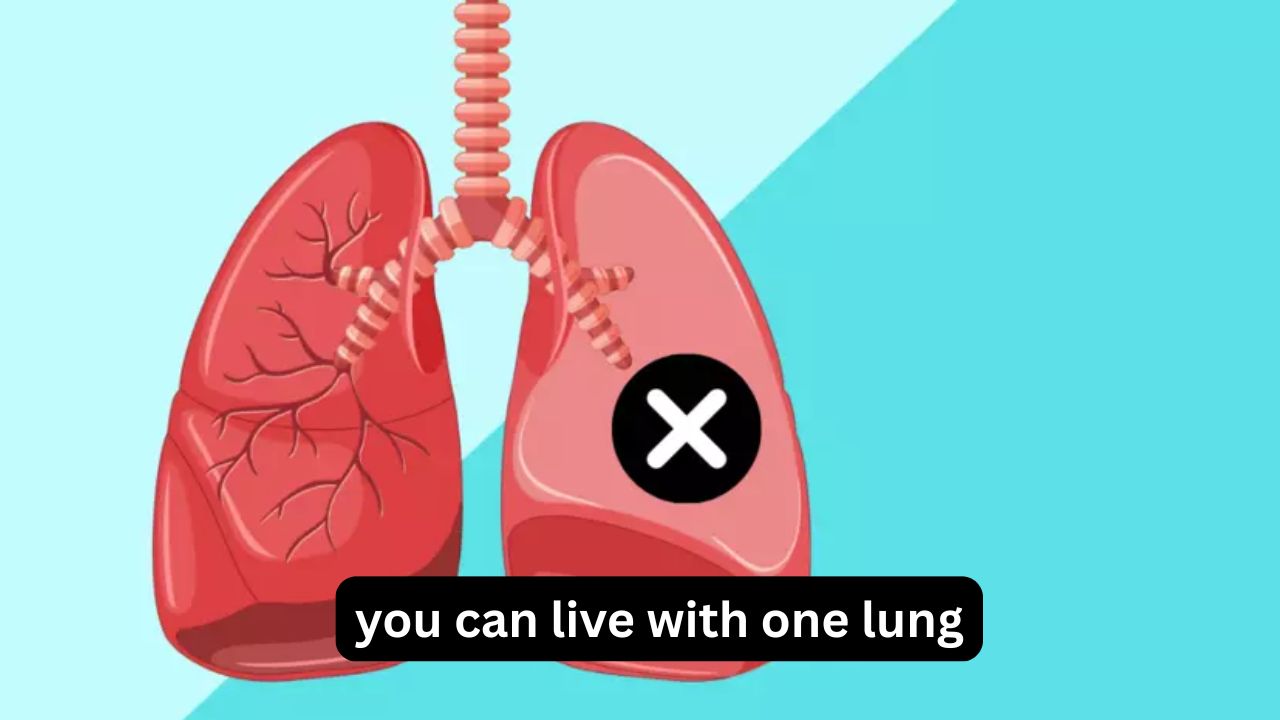
If you have been told that you may need to have a lung removed, one question can quickly become overwhelming: can you live with one lung? The short answer is yes. People can survive and live for many years with only one functioning lung, although their breathing capacity and exercise tolerance may be different from what they were before. The American Lung Association explains that having one lung is compatible with life because the remaining lung can continue the essential work of bringing oxygen into the blood and removing carbon dioxide.
However, “living with one lung” does not look exactly the same for everyone. Age, general fitness, the health of the remaining lung, the reason for lung removal, and other medical conditions all matter. Some people eventually return to many everyday activities, while others experience persistent breathlessness or reduced stamina.
This guide explains what happens after a pneumonectomy, what daily life may feel like, how exercise can be approached safely, and which habits can help protect the lung you have left.
Can you really live with one lung?
Yes. A person can live with one lung after a pneumonectomy, a surgery in which an entire lung is removed. Pneumonectomy may be performed when a lung disease or tumor cannot be adequately treated by removing only part of the lung.
The remaining lung takes over gas exchange for the body. Your body does not simply “replace” the missing lung, but it can adapt to having less total respiratory capacity.
The important distinction is this:
Living with one lung is possible, but your physical capacity may not be identical to that of someone with two healthy lungs.
A person with a healthy remaining lung may function quite differently from someone whose remaining lung also has COPD, fibrosis, infection, or another condition.
What determines how well you will do?
Doctors consider several factors, including:
- The health and function of the remaining lung
- Your heart health
- Age and overall physical condition
- The reason the lung was removed
- Whether you smoked or currently smoke
- Other medical conditions
- Your level of physical activity before surgery
- How well you recover after the operation
This is why there is no single answer to questions such as “How long can you live with one lung?” or “Will I be able to exercise normally?”
Individual medical circumstances matter more than the number of lungs alone.
What happens after a lung is removed?
A pneumonectomy is a major operation, and recovery takes time. Immediately after surgery, people commonly need careful monitoring while the body adjusts to the change in breathing mechanics.
Over time, the remaining lung and the cardiovascular system adapt to the reduced lung volume. Your breathing may gradually become easier as your strength and conditioning improve.
The recovery experience can be very different from person to person.
Someone who was physically active before surgery might eventually regain substantial independence. Another person may find that activities such as climbing stairs, walking quickly, or carrying heavy objects cause noticeable breathlessness.
That difference does not necessarily mean that something has gone wrong. Reduced respiratory reserve can make exertion feel harder.
What does daily life with one lung feel like?
For many people, ordinary activities remain possible, but they may need to manage their energy differently.
For example, imagine someone who previously walked quickly up three flights of stairs without thinking about it. After pneumonectomy, they might need to walk more slowly, pause between flights, or use the handrail.
Similarly, everyday tasks may be manageable but take more planning:
- Walking longer distances
- Carrying groceries
- Cleaning the house
- Gardening
- Climbing stairs
- Exercising
- Swimming
- Travelling
The goal is generally not to avoid activity altogether. Instead, activity should be adjusted to the person’s medical condition and recovery.
Pulmonary rehabilitation can be particularly useful for people with breathing limitations because it combines individually tailored exercise with education and support.
Can you exercise with one lung?
In many cases, yes—but exercise should be individualized.
Having one lung does not automatically mean that you must spend the rest of your life avoiding physical activity. Exercise can help improve physical conditioning and make everyday movement more manageable.
However, the appropriate intensity depends on your health and recovery.
A clinician or pulmonary rehabilitation team may recommend activities such as:
- Walking
- Stationary cycling
- Light strength exercises
- Breathing exercises
- Gradually increasing everyday physical activity
Pulmonary rehabilitation programs use exercises tailored to an individual’s ability rather than giving everyone the same routine.
A practical example
Suppose walking for 10 minutes leaves you extremely tired.
Instead of assuming that exercise is impossible, a rehabilitation professional may help you establish a manageable starting level and gradually build endurance.
The key is progressive conditioning rather than suddenly pushing yourself to your previous limits.
If you have recently undergone pneumonectomy, don’t begin a demanding exercise program without discussing it with your healthcare team.
Can you run with one lung?
Some people may be able to perform vigorous exercise after recovery, but running ability varies substantially.
Running places much greater demands on oxygen delivery than slow walking. A person with excellent remaining-lung function and good cardiovascular fitness may have considerably more exercise capacity than someone with another respiratory or heart condition.
Therefore, there is no universal rule saying that someone with one lung can or cannot run.
Your doctor may use pulmonary function testing, exercise testing, oxygen measurements, and your overall health to determine what level of activity is appropriate.
Can you swim with one lung?
Swimming deserves special attention after pneumonectomy.
Cancer Research UK notes that people who have had a lung removed may have difficulty swimming because having one lung can affect buoyancy in water. The organization recommends discussing swimming with your surgical team and being particularly careful when returning to the water.
This is an unusual but important practical issue.
Even if your breathing feels adequate on land, being in water creates a different physical environment. Someone returning to swimming should therefore not assume that previous swimming ability automatically means the activity is safe immediately after surgery.
Does one lung become stronger?
The remaining lung does not literally grow another complete lung to replace the missing one.
Instead, your body adapts to the reduced lung capacity. The remaining lung performs the necessary gas exchange, while the cardiovascular system and muscles also play important roles in how well you tolerate physical activity.
This leads to an important insight:
Breathing capacity and exercise capacity are not exactly the same thing.
Two people can have similar lung measurements but very different abilities to walk, climb stairs, or exercise because fitness, muscle strength, heart function, and conditioning also influence performance.
Can you live a normal life with one lung?
“Normal” depends on what you mean by normal.
A person may be able to work, socialize, travel, perform household activities, and enjoy hobbies after recovering from pneumonectomy. But some activities may require more rest or planning than before.
For example, a person might:
- Take breaks during long walks
- Avoid carrying very heavy loads
- Use slower pacing on stairs
- Schedule rest periods during busy days
- Gradually increase exercise
- Pay closer attention to respiratory infections
A useful way to think about it is adaptation rather than limitation.
You may need to change how you perform certain activities without necessarily giving up the activities themselves.
How long can you live with one lung?
There is no reliable number of years that applies to everyone.
Life expectancy after losing a lung depends heavily on why the lung was removed and the person’s overall health. For example, someone who undergoes pneumonectomy for a localized cancer is in a very different situation from someone who has serious disease affecting the remaining lung.
The operation itself does not create a fixed lifespan.
Your doctors can give a more meaningful prognosis by considering the original disease, treatment response, remaining-lung function, heart health, age, and other individual factors.
Be cautious with online claims promising a specific number of years for everyone living with one lung. Such figures can be misleading because they ignore the reason for pneumonectomy and differences between patients.
How can you protect your remaining lung?
When you have one functioning lung, protecting it becomes especially important.
Avoid smoking and secondhand smoke
Smoking can damage lung tissue and increase respiratory risks. If you smoke, quitting is one of the most important steps you can take for your remaining lung.
Avoiding secondhand smoke is also sensible.
Reduce exposure to lung irritants
Depending on your circumstances, this may include:
- Heavy dust
- Chemical fumes
- Industrial pollutants
- Indoor smoke
- Poorly ventilated work environments
If your job exposes you to respiratory hazards, discuss appropriate protective measures with your healthcare provider or occupational health professional.
Stay physically active within your limits
Regular physical activity can help maintain strength and conditioning. The important part is choosing an activity level appropriate for your health rather than trying to prove that you can exercise like you did before surgery.
Keep vaccinations up to date
Respiratory infections can be particularly concerning for people with limited lung reserve. Ask your healthcare professional which vaccinations are appropriate for your age and medical circumstances. Lung-health organizations emphasize vaccination and infection prevention as part of protecting respiratory health.
Treat breathing problems seriously
Don’t automatically assume that new or worsening breathlessness is simply “because I have one lung.”
A new change can have many possible causes, including infection, heart problems, or complications related to your underlying condition.
What are some less obvious challenges of having one lung?
People often focus entirely on breathing, but there can be practical issues that are easy to overlook.
1. Water activities can feel different
As mentioned above, buoyancy can be affected after pneumonectomy. Swimming may therefore require additional caution even after you feel physically recovered.
2. Fitness can become more important than expected
A reduction in lung capacity can make deconditioning more noticeable. If you become inactive because you are afraid of breathlessness, your muscles can become less conditioned, potentially making ordinary activities feel even harder.
This is one reason professionally supervised rehabilitation can be valuable.
3. Your “new normal” may change gradually
Recovery isn’t necessarily a straight line.
You might feel significantly better one week and more tired the next. Progress may be easier to recognize over months than from one day to another.
Keeping track of walking ability, fatigue, and everyday activities can sometimes give you a clearer picture of progress than judging yourself day by day.
Common mistakes to avoid
Living with one lung requires sensible precautions, but excessive fear can also become a problem.
Mistake 1: Assuming exercise is dangerous
Breathlessness during exertion does not automatically mean that exercise is harmful. The appropriate exercise level should be determined according to your condition and recovery plan.
Mistake 2: Trying to return to your old fitness level immediately
A major operation requires recovery. Trying to lift heavy objects or perform strenuous exercise too quickly can interfere with recovery.
Mistake 3: Treating every symptom as normal
Having one lung can explain some reduced exercise tolerance, but it does not explain every new symptom.
Sudden or severe breathing difficulty, chest pain, fainting, blue or gray lips, confusion, or rapidly worsening symptoms require urgent medical attention.
Mistake 4: Ignoring rehabilitation
People sometimes think rehabilitation is only for people who are extremely sick. In reality, structured pulmonary rehabilitation is designed to improve exercise ability, symptom management, confidence, and daily functioning in people with significant respiratory limitations.
What should you ask your doctor after pneumonectomy?
Instead of asking only, “Can I live with one lung?”, consider asking more specific questions:
- What is my current lung function?
- How healthy is my remaining lung?
- What activities are safe for me?
- When can I begin structured exercise?
- Would pulmonary rehabilitation help?
- Can I swim?
- Can I travel by air?
- What symptoms should make me seek urgent care?
- Which vaccinations should I receive?
- How should I protect my remaining lung?
- How often should my lung function or underlying disease be monitored?
These questions turn a frightening general concern into a practical recovery plan.
FAQ
Can a person live a long life with one lung?
Yes, some people live for many years with one lung. However, longevity depends heavily on the reason the lung was removed, the condition of the remaining lung, heart health, age, and other medical factors. There is no single life-expectancy figure that applies to everyone.
Can you live a normal life with one lung after pneumonectomy?
Many people can return to independent daily living after recovery, although their exercise capacity may be reduced. Some activities may require slower pacing or more frequent rest. The eventual level of function varies considerably between individuals.
Can you exercise with only one lung?
Often, yes, but exercise should be matched to your health and recovery. Walking, cycling, strength training, and other activities may be incorporated into a supervised rehabilitation plan. Pulmonary rehabilitation can help people build exercise capacity safely and learn strategies for managing breathlessness.
Can you swim after having a lung removed?
Swimming may be possible after recovery, but it requires particular caution because losing a lung can affect buoyancy. Cancer Research UK recommends discussing swimming with your surgical team and taking precautions when returning to the water.
Does having one lung mean you will always be short of breath?
Not necessarily. Some people have relatively few symptoms during everyday activities, while others experience significant breathlessness, particularly during exertion. Symptoms depend on the health of the remaining lung, cardiovascular fitness, underlying disease, and other factors.
What is the most important thing to remember when living with one lung?
Protect the lung you have, follow your medical team’s recommendations, and build physical activity gradually. Avoid smoking and harmful respiratory exposures, keep appropriate vaccinations current, and seek medical advice when your breathing changes unexpectedly.
Conclusion
You can live with one lung, and having a pneumonectomy does not automatically mean giving up an active or meaningful life. The remaining lung can perform the essential work of oxygen exchange, while your body adapts to having less respiratory reserve.
The biggest difference is that your physical limits may change. Walking, exercise, work, swimming, and other activities may need to be approached more thoughtfully, particularly during recovery.
The most useful approach is not to focus on what you have lost, but on understanding what your remaining lung can safely support. With appropriate medical follow-up, lung-protective habits, and—when appropriate—pulmonary rehabilitation, many people can gradually build confidence in their new routine.
If you are facing lung-removal surgery now, your own surgeon or pulmonologist is the right person to estimate your expected recovery because your individual lung function and underlying condition matter far more than a general statistic.
Medical note: This article is general educational information, not a diagnosis or individualized treatment plan. New, severe, or rapidly worsening breathing problems should receive prompt medical evaluation.
