
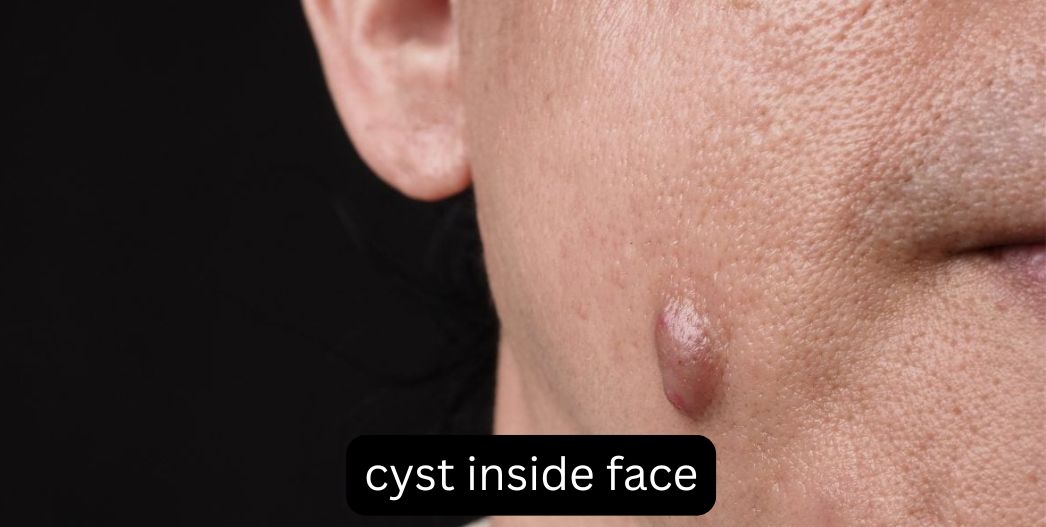
Finding a lump beneath the skin of your face can be unsettling, especially when it feels different from an ordinary pimple. A cyst inside face is often a small, enclosed sac beneath the skin, and one of the most common possibilities is an epidermoid or epidermal inclusion cyst. These cysts are usually slow-growing and harmless, but they can become swollen, tender, infected, or noticeable enough to affect your appearance.
The important part is not to assume that every facial lump is a cyst. Acne, lipomas, enlarged lymph nodes, abscesses, inflamed hair follicles, and other skin growths can sometimes feel similar. A healthcare professional can usually identify a superficial cyst through an examination and decide whether further testing is needed.
This guide explains what a cyst inside the face may feel like, why it develops, how to tell an uncomplicated cyst from an inflamed one, what you can safely do at home, and when professional treatment is appropriate.
What Is a Cyst Inside the Face?
A facial cyst is a closed pocket that develops underneath or within the skin. One common type is an epidermoid cyst, sometimes called an epidermal inclusion cyst.
Despite the common phrase “sebaceous cyst,” many of these cysts are not actually filled with sebum. Instead, epidermoid cysts typically contain keratin and trapped cell debris.
They commonly occur on:
- The cheeks
- Forehead
- Around the jaw
- Chin
- Near the ears
- Nose and surrounding skin
- Neck and hairline
A typical cyst may feel like a smooth, round lump beneath the skin. It can sometimes move slightly when pressed and may have a small dark opening, known as a punctum, in the center.
Is a facial cyst usually dangerous?
Usually, no. Most epidermoid cysts are benign and cause little or no trouble.
The situation changes if the lump becomes rapidly larger, painful, red, warm, swollen, repeatedly drains, or breaks open. Those changes can indicate inflammation or infection and deserve medical assessment.
What Does a Cyst Inside the Face Feel Like?
A facial cyst can initially be easy to ignore because it may be painless.
Common characteristics include:
- A round or dome-shaped bump
- A firm or rubbery feeling beneath the skin
- Slow enlargement over time
- Little or no pain
- Normal-looking skin over the lump
- A small central dark spot in some cases
- Tenderness when inflamed
- Redness or warmth if inflammation develops
Some cysts remain the same size for years. Others gradually become larger and more noticeable.
One useful distinction is how quickly the lump changed. A stable, slowly growing bump is different from a lump that becomes dramatically swollen and painful over a day or two.
That doesn’t establish the diagnosis, but it is useful information to tell your doctor.
Why Do Facial Cysts Form?
Epidermoid cysts can develop when skin cells that normally shed from the surface become trapped deeper in the skin. These cells continue producing keratin, which gradually accumulates inside a small sac.
Several situations can contribute, including:
- Blockage involving a hair follicle
- Previous skin injury
- Acne or inflammation
- Surgical wounds or other trauma
- Irritation of the skin
Sometimes there is no obvious reason why a particular cyst appeared.
A less obvious cause: previous skin injury
A cyst does not always appear immediately after an injury. A minor scratch, procedure, or other trauma can disrupt the normal movement of skin cells, and a cyst may become noticeable later.
This is one reason it can be difficult to connect a facial lump with an old injury unless you specifically think about the history of that area.
Cyst vs Pimple: How Are They Different?
A cyst and a deep pimple can look surprisingly similar, particularly when the area becomes inflamed.
| Feature | Facial cyst | Deep pimple |
|---|---|---|
| Growth | Often slow | Often develops more quickly |
| Texture | Usually a defined lump | Often tender and inflamed |
| Pain | Frequently painless initially | Often tender |
| Central opening | Sometimes present | Not usually a persistent punctum |
| Recurrence | Can return after incomplete treatment | Usually resolves with acne treatment |
| Contents | Keratin and cell debris in many epidermoid cysts | Sebum, inflammatory material and cellular debris |
| Treatment | Observation or professional removal | Depends on acne severity |
This comparison is only a guide. A healthcare professional may need to examine the lump to determine what it actually is.
What Makes a Facial Cyst Inflamed or Infected?
An important point is that inflammation and infection are not exactly the same thing.
A cyst can become inflamed after irritation or rupture and become red, swollen and painful without necessarily having a bacterial infection. Conversely, a ruptured cyst can create conditions in which infection develops.
Watch for:
- Increasing redness
- Warmth around the lump
- Increasing pain
- Rapid swelling
- Pus-like drainage
- Foul-smelling material
- Skin becoming increasingly tender
- Fever or feeling generally unwell
A painful, rapidly changing facial lump should not simply be treated as a normal pimple.
Can You Pop a Cyst Inside Your Face?
No. Avoid squeezing, puncturing or cutting it yourself.
This is particularly important on the face, where unnecessary trauma can cause inflammation, infection and scarring. Even when squeezing releases material, the cyst’s outer capsule may remain underneath the skin, allowing it to come back.
Trying to remove it with a needle at home creates another problem: you may introduce bacteria into the area.
A better approach is to leave an uncomplicated cyst alone and have it examined if it persists, grows, becomes painful, or bothers you.
What Can You Do at Home?
If the lump has already been diagnosed as a cyst and is not causing significant symptoms, treatment may not be necessary.
For mild irritation, a warm, moist compress may provide comfort. It should be comfortably warm rather than hot enough to burn the skin.
Practical steps include:
- Keep the area clean.
- Avoid repeatedly touching or pressing the lump.
- Don’t attempt to drain it.
- Avoid harsh products that irritate the surrounding skin.
- Monitor changes in size, color, pain and drainage.
- Arrange an examination if it changes significantly.
A warm compress may help with discomfort, but it does not reliably remove the cyst capsule. That’s an important distinction when deciding whether to seek definitive treatment.
When Should You See a Doctor?
Arrange a medical assessment if:
- The lump is growing quickly.
- It becomes painful.
- The skin becomes red or hot.
- It starts draining.
- It repeatedly returns.
- It interferes with shaving, washing or daily activities.
- It is close to the eye or another sensitive facial structure.
- You are unsure whether it is actually a cyst.
- You are concerned about a new or changing lump.
Medical evaluation is especially useful for a lump that is new and unexplained. Not every bump under the facial skin is an epidermoid cyst.
Seek prompt medical care if a facial swelling is rapidly worsening or accompanied by significant illness, extensive redness or other signs of a spreading infection.
How Is a Facial Cyst Diagnosed?
For many superficial cysts, diagnosis starts with a physical examination.
A clinician may ask:
- When did you first notice it?
- Has it changed in size?
- Is it painful?
- Has it drained?
- Have you had similar lumps before?
- Was the area previously injured or treated?
- Have you experienced significant acne or skin inflammation?
Most uncomplicated epidermoid cysts can be recognized clinically. In less obvious cases, an ultrasound or other investigation may be considered, depending on the location and characteristics of the lump.
Why the exact location matters
A small lump immediately under the skin of the cheek is different from a mass that seems deeply attached to structures around the eye, jaw or mouth.
Deeper or unusual facial lumps may require additional assessment before treatment. This is one reason a person should not assume that a lump is a routine skin cyst simply because it resembles one.
How Are Cysts Inside the Face Removed?
Treatment depends on the cyst’s size, location, symptoms and whether it is inflamed.
1. Observation
If the cyst is small, painless and not causing problems, a clinician may recommend simply monitoring it.
There is no requirement to remove every harmless cyst.
2. Steroid injection
A healthcare professional may sometimes use a corticosteroid injection to reduce inflammation and swelling. This can help an inflamed cyst, but it is not the same as removing the entire cyst.
3. Incision and drainage
A clinician can make a small opening and drain the contents.
This may relieve pressure and swelling, particularly when a cyst is inflamed. However, drainage alone can leave the cyst wall behind, meaning the lump can return.
4. Complete surgical removal
For a cyst that repeatedly returns or causes cosmetic or physical problems, complete excision may be considered.
The aim is to remove the cyst and its surrounding capsule. This can reduce the chance of recurrence, although no procedure is completely free of risks such as infection, bleeding, scarring or recurrence.
Because the cyst is on the face, the choice of clinician and technique can matter when minimizing visible scarring.
What If the Cyst Is Inflamed?
An inflamed cyst may be more difficult to remove immediately. In some cases, a clinician first focuses on controlling the inflammation and then considers definitive removal once the area has settled.
This explains why a person may visit a clinic expecting immediate removal but instead be told to treat the inflammation first.
If there is a confirmed bacterial infection, antibiotics may sometimes be part of treatment, depending on the clinical assessment.
Antibiotics should not be started simply because a lump looks red; redness can also occur with inflammation that is not caused by an infection.
Will a Facial Cyst Go Away on Its Own?
Some cysts can shrink or remain quiet for long periods, but many epidermoid cysts can persist for years without treatment.
If the cyst is not bothering you, observation may be reasonable after a healthcare professional has identified it.
If it is repeatedly inflamed, cosmetically bothersome, or interfering with daily life, discussing removal is more useful than repeatedly trying home remedies.
Three Practical Insights People Often Miss
A cyst can be inflamed without being infected
Pain and redness do not automatically prove that bacteria are present. A cyst can become inflamed because its contents irritate the surrounding tissue. Proper examination helps determine whether infection is actually suspected.
Drainage does not necessarily mean the problem is gone
If a cyst bursts or is drained, the material may disappear while the capsule remains. The lump can therefore refill later. This is why repeatedly squeezing a facial cyst can turn into a cycle of swelling, drainage and recurrence.
Facial location makes the treatment decision more nuanced
A cyst that would be easy to ignore on a less visible part of the body can feel much more significant on the cheek, forehead or near the eye. Cosmetic concerns are a legitimate reason to discuss treatment, but the potential scar from removal should also be considered.
Common Mistakes to Avoid
Squeezing it repeatedly: This can increase irritation and infection risk.
Using a needle at home: Puncturing the skin introduces bacteria and does not guarantee removal of the cyst wall.
Assuming every lump is acne: A persistent, firm lump deserves a proper diagnosis if its behavior doesn’t fit ordinary acne.
Waiting despite rapid changes: Fast growth, significant pain, drainage or spreading redness warrants medical attention.
Expecting creams to dissolve the capsule: Topical skincare may help surrounding skin but should not be relied on to eliminate an established cyst.
FAQ
Is a cyst inside the face dangerous?
Most common epidermoid cysts are benign and do not cause serious problems. However, a new or changing facial lump should not automatically be assumed to be a cyst. Rapid growth, persistent pain, inflammation, drainage or other unusual changes are reasons to have it assessed.
How do I get rid of a cyst inside my face?
A small, symptom-free cyst may simply be monitored. If it becomes troublesome, a healthcare professional may consider treatments such as drainage, treatment of inflammation or complete surgical removal. Trying to pop or cut the cyst yourself is not recommended because it can increase the risk of infection, scarring and recurrence.
Can a facial cyst go away without treatment?
Some cysts may become smaller or remain stable, but many can persist for a long time. An epidermoid cyst may eventually require professional treatment if it grows, becomes painful, repeatedly inflames or causes cosmetic concerns.
How can I tell if a bump on my face is a cyst or a pimple?
A cyst is often a defined, rounded lump beneath the skin and may grow slowly, sometimes with a small central opening. A pimple is more commonly associated with an active acne lesion and inflammatory changes. Because several skin conditions can resemble each other, persistent or unusual lumps should be examined rather than diagnosed from appearance alone.
Can you squeeze an epidermoid cyst on your face?
It is better not to squeeze it. Squeezing can irritate the tissue, cause the cyst to rupture and increase the risk of infection or scarring. Even if material comes out, the cyst capsule may remain and the lump can return.
When should I see a dermatologist for a facial cyst?
Consider seeing a dermatologist or another qualified healthcare professional when a facial lump is persistent, growing, painful, inflamed, repeatedly draining or cosmetically bothersome. A specialist can also help distinguish a cyst from other types of skin lumps and discuss whether removal is appropriate.
Conclusion
A cyst inside the face is often an epidermoid or epidermal inclusion cyst: a usually harmless pocket beneath the skin that contains keratin and cellular material. Many remain painless and require no treatment, while others become inflamed, infected, cosmetically bothersome or repeatedly return.
The safest approach is simple: don’t squeeze, puncture or cut the lump yourself. Monitor changes, use gentle care, and have persistent or changing facial lumps properly assessed. If treatment is necessary, a healthcare professional can choose between observation, managing inflammation, drainage or complete removal based on the individual situation.
If you are currently dealing with a facial lump that is rapidly growing, very painful, increasingly red or swollen, or producing drainage, professional assessment is more appropriate than trying to treat it like an ordinary pimple.
Medical note: This article provides general health information and cannot diagnose a particular facial lump. A healthcare professional should examine a new, persistent or changing lump to determine its cause.
