
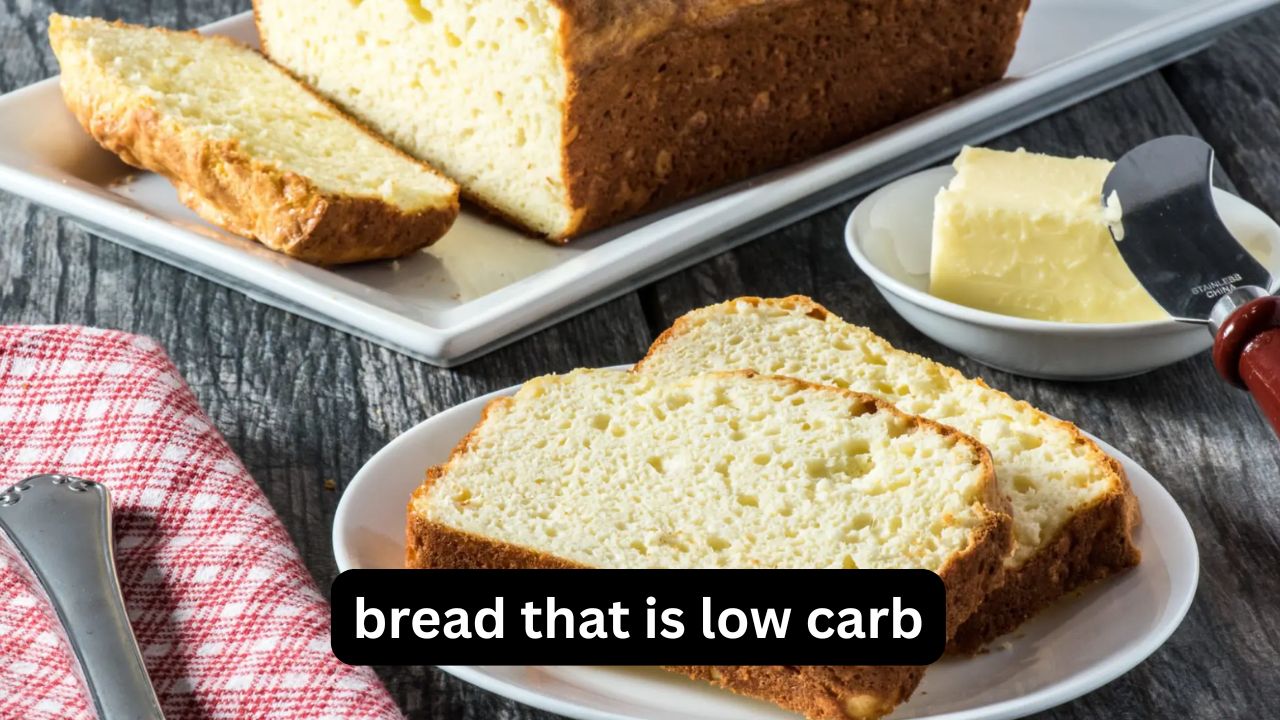
If you love sandwiches, toast, or a simple slice of bread with breakfast, cutting carbohydrates can feel harder than expected. The good news is that bread that is low carb does exist, but not every loaf marketed as “healthy,” “keto,” or “multigrain” is actually low in carbohydrates.
The biggest issue is that bread labels can be confusing. A loaf may contain whole grains and plenty of fiber while still providing a substantial amount of carbohydrate per serving. Other breads use ingredients such as almond flour, coconut flour, eggs, seeds, or added fibers to reduce digestible carbohydrates.
So, is there any kind of bread that is low carb? Yes. The better question is which type fits your diet, how much carbohydrate you consider acceptable, and whether you want something that behaves like conventional bread.
This guide explains the main types of low-carb bread, how to read the nutrition label, which options work best for different meals, and the mistakes that can make a supposedly low-carb choice less useful.
What Counts as Low-Carb Bread?
There is no single universal definition of “low carb bread.” In practice, the term usually describes bread that contains significantly fewer carbohydrates than conventional wheat bread.
A typical slice of regular bread may contain around 12–20 grams of total carbohydrate, although the amount varies considerably between products.
Low-carb alternatives can contain substantially less digestible carbohydrate because manufacturers replace some of the flour with ingredients such as:
- Almond or other nut flours
- Coconut flour
- Eggs
- Seeds
- Psyllium husk
- Flaxseed
- Wheat fiber
- Resistant starch
- Other high-fiber ingredients
Some products are specifically formulated for ketogenic diets, while others are simply lower in carbohydrate than standard bread.
The important point is this: “low carb” does not automatically mean “low calorie,” “high protein,” or “more nutritious.” Those are separate nutritional characteristics.
Is There Any Kind of Bread That Is Low Carb?
Yes. Several types can work, but they have noticeably different textures and nutritional profiles.
1. Almond Flour Bread
Almond flour bread is one of the better-known grain-free options.
Because almond flour contains considerably fewer digestible carbohydrates than conventional wheat flour, it can be useful for people following a low-carb or keto-style eating pattern.
It tends to be:
- Moist
- Dense
- Slightly nutty
- More filling than very light white bread
It works particularly well for toast, breakfast sandwiches, and open-faced sandwiches.
The trade-off is that almond flour is relatively energy-dense, so a lower carbohydrate count does not necessarily mean the bread is low in calories.
2. Coconut Flour Bread
Coconut flour is another popular ingredient in low-carb baking.
It absorbs a large amount of liquid, so recipes typically require eggs or other moisture-rich ingredients. The resulting bread can be soft but somewhat different from conventional wheat bread.
Coconut flour bread may be useful if you want a grain-free option, but its flavor can be slightly sweet or coconut-like.
3. Seed-Based Bread
Seed breads can be a particularly practical choice when your priority is fiber and texture.
Common ingredients include:
- Flaxseed
- Chia seeds
- Sunflower seeds
- Pumpkin seeds
- Sesame seeds
These breads can be dense and chewy rather than fluffy. That makes them excellent for substantial sandwiches, especially when you want the bread itself to contribute texture.
One useful insight is that a dense slice can sometimes be more satisfying than a very airy low-carb slice. You may eat one substantial piece rather than several thin pieces simply because it provides more texture and satiety.
4. High-Fiber Commercial Bread
Some supermarket breads use added fibers to dramatically reduce their digestible carbohydrate content.
These products may look and taste surprisingly similar to ordinary sandwich bread. They can be convenient for people who don’t want to bake or adjust to dense grain-free loaves.
However, labels deserve careful attention. Two products can both advertise themselves as low carb while having very different amounts of total carbohydrate, fiber, protein, and calories.
5. Egg-Based or Cloud-Style Bread
Egg-based breads are another option, particularly for people following very low-carb diets.
They are often made with eggs and other low-carbohydrate ingredients rather than traditional flour. The texture can be light and airy.
They’re useful for:
- Burgers
- Breakfast sandwiches
- Wrap-style meals
- Light sandwiches
The main disadvantage is that they don’t always provide the chewy structure people expect from normal bread.
How to Read a Low-Carb Bread Label
This is where many shoppers make mistakes.
Don’t judge bread solely from the large “LOW CARB” statement on the front of the package. Turn it around and examine the nutrition panel.
Look at these five things:
1. Serving Size
First check how much bread the nutrition information represents.
A serving might be one slice, but some products define a serving as two slices. Comparing products without adjusting for serving size can make one loaf appear better than another when it isn’t.
2. Total Carbohydrate
This is the starting point.
If a slice contains 15 grams of total carbohydrate, it isn’t comparable to a product containing 5 grams simply because both are advertised as “low carb.”
3. Fiber
Fiber is included within total carbohydrate on many nutrition labels.
Because fiber is not digested in the same way as digestible starches and sugars, it can substantially affect how many carbohydrates you actually count, depending on the dietary system you follow.
4. Added Sugars
Check the sugar information, especially if you’re trying to minimize rapidly digestible carbohydrates.
A bread containing whole grains can still contain added sugar, although the overall nutritional picture matters more than one ingredient in isolation.
5. Protein and Calories
Don’t ignore these numbers.
A bread with very few carbohydrates may still be calorie-dense because it contains substantial amounts of nuts, seeds, oils, or other ingredients.
Likewise, a low-carb bread with more protein and fiber may be more satisfying than one that simply minimizes carbohydrate.
Net Carbs vs. Total Carbs
One of the most confusing subjects in low-carb bread is the difference between total carbohydrates and “net carbs.”
A simplified calculation commonly used by low-carb and ketogenic dieters is:
Net carbs = total carbohydrates − fiber
Some people also subtract certain sugar alcohols, but that becomes more complicated because different sugar alcohols can affect blood glucose differently.
This is why it’s better not to blindly trust a large “net carb” number printed on the front of a package.
Instead, examine the complete nutrition panel and ingredient list.
If you’re following a medically prescribed carbohydrate target, use the method recommended by your healthcare professional rather than assuming every manufacturer’s net-carb calculation applies to you.
Low-Carb Bread vs. Whole-Grain Bread
These two are often confused because they can both be marketed as healthier choices.
Whole-grain bread generally contains the entire grain, including components such as the bran and germ. It can provide fiber, vitamins, minerals, and other beneficial nutrients.
But whole grain does not mean carbohydrate-free.
A whole-grain loaf may still contain enough carbohydrate per slice to exceed the target of someone following a strict low-carb diet.
Low-carb bread, on the other hand, is specifically formulated to reduce carbohydrate content, often by replacing some conventional flour with fiber, seeds, nuts, or other ingredients.
Neither category is automatically better for everyone.
For example:
Someone moderately reducing carbohydrates:
A nutrient-rich whole-grain bread may fit perfectly well.
Someone following a strict ketogenic approach:
A specially formulated low-carb bread may be more appropriate.
The right choice depends on the overall diet rather than the marketing label.
Which Low-Carb Bread Is Best for Sandwiches?
For sandwiches, texture matters almost as much as carbohydrate content.
A bread that falls apart when you add tomatoes, chicken, or sauce isn’t particularly useful, regardless of its nutrition label.
Look for bread with enough structure to hold fillings.
Good options can include:
- High-fiber sandwich bread
- Seed-based bread
- Almond flour bread
- Protein-rich low-carb bread
- Dense flaxseed bread
For a classic sandwich experience, commercial high-fiber bread often has an advantage because it resembles conventional bread more closely.
For an open-faced sandwich, dense seed or almond bread can be excellent because you don’t need a second slice.
What About Low-Carb Bread for Toast?
Toast changes the experience considerably.
Some low-carb breads become crisp and pleasantly firm when toasted. Others become dry or overly brittle.
If toast is important to you, test a small amount before buying a large package.
A practical approach is to toast the bread slightly longer than regular bread and watch it carefully. Because low-carb breads can have different moisture levels and ingredients, they may brown differently from wheat bread.
Toppings can also make a big difference.
Try:
- Eggs and avocado
- Cottage cheese and herbs
- Peanut or nut butter
- Smoked fish with cream cheese
- Turkey with mustard
The topping can turn a relatively small slice into a much more satisfying meal.
Can You Make Low-Carb Bread at Home?
Absolutely.
Homemade low-carb bread gives you much more control over the ingredients.
A basic recipe might use some combination of:
- Eggs
- Almond flour
- Coconut flour
- Psyllium husk
- Flaxseed
- Baking powder
- Seeds
- Salt
The challenge is getting the texture right.
Psyllium, eggs, and alternative flours behave very differently from wheat flour. You shouldn’t expect a recipe made primarily from almond flour to knead, rise, and stretch exactly like traditional wheat dough.
One practical trick is to let low-carb bread cool completely before slicing it. Cutting it while warm can make some recipes appear gummy or fragile.
A Simple Low-Carb Bread Meal
Suppose you’re trying to reduce carbohydrates but don’t want to give up breakfast sandwiches.
Instead of:
- Two slices of regular bread
- Sweet spread
- Processed meat
- Sugary drink
you could build a meal around:
- One or two slices of low-carb bread
- Two eggs
- Avocado
- Tomato
- Leafy greens
- Unsweetened tea or coffee
The bread is only one part of the meal.
This matters because people sometimes focus so heavily on finding the lowest-carb bread that they overlook what they’re putting between the slices.
A low-carb sandwich filled with sugary sauces and highly processed ingredients may not be a particularly balanced meal.
Three Less-Obvious Things to Know About Low-Carb Bread
Fiber can change the eating experience
Adding large amounts of fiber doesn’t just change carbohydrate numbers. It can also affect texture, moisture, digestion, and fullness.
A bread with substantial fiber may feel much heavier than ordinary white bread even when the slice looks similar.
That can be an advantage if you’re trying to feel satisfied with a smaller serving.
“Keto” bread isn’t automatically nutritionally superior
Keto is primarily a carbohydrate-focused dietary approach. A keto-friendly bread can still be relatively high in calories, saturated fat, sodium, or other nutrients you may want to monitor.
Think of “keto” as describing how a food fits into a particular carbohydrate target, not as a universal health rating.
Your favorite bread may still fit
People sometimes assume they must completely eliminate normal bread to eat lower carb.
That isn’t necessarily true.
If your personal carbohydrate target allows it, you might prefer having one small serving of ordinary whole-grain bread rather than eating several slices of a low-carb substitute you don’t enjoy.
Long-term dietary habits are often easier to maintain when the food is satisfying and realistic.
Common Mistakes When Choosing Low-Carb Bread
Mistake 1: Trusting the front label
“Healthy,” “multigrain,” “high protein,” and “keto” don’t tell you the complete nutritional story.
Always check the nutrition panel.
Mistake 2: Comparing slices instead of serving sizes
A very thin slice may have fewer carbohydrates simply because there’s less bread.
Compare equivalent serving weights when you’re making a serious nutritional comparison.
Mistake 3: Assuming low carb means unlimited
Lower carbohydrate doesn’t mean you can eat unlimited quantities.
Calories, protein, fats, fiber, and overall meal composition still matter.
Mistake 4: Ignoring your own tolerance
Some high-fiber breads can cause bloating, gas, or digestive discomfort in people who aren’t accustomed to large amounts of added fiber.
If you’re switching suddenly, start with a modest amount and see how your body responds.
Mistake 5: Choosing bread you don’t actually enjoy
This is an underrated problem.
If a low-carb loaf tastes unpleasant, you’ll probably end up craving conventional bread or abandoning the plan altogether.
Taste, texture, convenience, and nutritional value all matter.
How to Choose the Right Bread for Your Goal
Your best choice depends on why you’re reducing carbohydrates.
| Goal | Option worth considering |
|---|---|
| Strict carbohydrate reduction | Specially formulated low-carb or keto bread |
| Grain-free eating | Almond or coconut flour bread |
| More fiber | Seed-based or high-fiber bread |
| Traditional sandwich texture | High-fiber commercial low-carb bread |
| Homemade ingredients | Almond, coconut, flax, or seed-based recipes |
| More filling toast | Dense seed or protein-rich bread |
| Moderate carb reduction | Whole-grain bread in an appropriate portion |
There is no single “best” low-carb bread for everyone.
FAQ
Is there any kind of bread that is low carb?
Yes. Low-carb bread can be made from ingredients such as almond flour, coconut flour, flaxseed, eggs, seeds, and added fibers. Commercial high-fiber breads can also contain substantially fewer digestible carbohydrates than conventional bread. The exact carbohydrate content varies by recipe and brand, so checking the nutrition label is essential.
What bread has the lowest carbs?
Some specially formulated keto breads and egg-based breads can contain very little digestible carbohydrate per serving. However, the lowest number isn’t necessarily the best choice because calories, fiber, protein, ingredients, taste, and portion size also matter. Compare the full nutrition panel rather than choosing based only on the advertised carb number.
Can I eat bread on a low-carb diet?
Yes, depending on your individual carbohydrate target. A small serving of whole-grain bread may fit a moderately low-carb diet, while someone following a very strict ketogenic diet may need a specially formulated low-carb alternative. Your total daily carbohydrate intake matters more than whether a food is simply labeled “low carb.”
Is whole wheat bread low carb?
Whole wheat bread is generally more nutritious than highly refined bread in several respects, but it is not necessarily low in carbohydrates. Whole wheat still contains carbohydrates because it is made from wheat grain. If you’re following a strict low-carb diet, check the carbohydrate and fiber amounts per serving rather than assuming whole wheat qualifies as low carb.
Is keto bread healthier than regular bread?
Not automatically. Keto bread is designed to provide fewer carbohydrates, which can be useful for people following a ketogenic or low-carb eating pattern. However, its overall nutritional quality depends on its ingredients, fiber, protein, calories, sodium, and fats. “Keto” should be viewed as a dietary fit rather than a guarantee that a product is healthier.
Can low-carb bread help with weight loss?
It can make it easier for some people to control carbohydrate intake, but low-carb bread itself does not cause weight loss. Overall calorie intake, food choices, activity, sleep, and long-term dietary consistency all influence weight management. A low-carb sandwich can still be calorie-heavy if it contains large amounts of cheese, sauces, oils, or processed fillings.
Final Takeaway
Yes, there are several kinds of bread that is low carb, including almond flour, coconut flour, seed-based, egg-based, and high-fiber commercial breads.
The smartest choice isn’t necessarily the loaf with the smallest number on the package. Look at total carbohydrates, fiber, calories, protein, ingredients, serving size, and—most importantly—whether the bread works well with the way you actually eat.
If you’re reducing carbohydrates for general dietary reasons, you may not need to eliminate conventional whole-grain bread completely. If you’re following a strict carbohydrate or ketogenic plan, a purpose-made low-carb loaf may make sandwiches and toast much easier to maintain.
The best bread is ultimately the one that fits your nutritional target, tastes good enough to keep eating, and helps you build satisfying meals rather than making your diet feel restrictive.
