
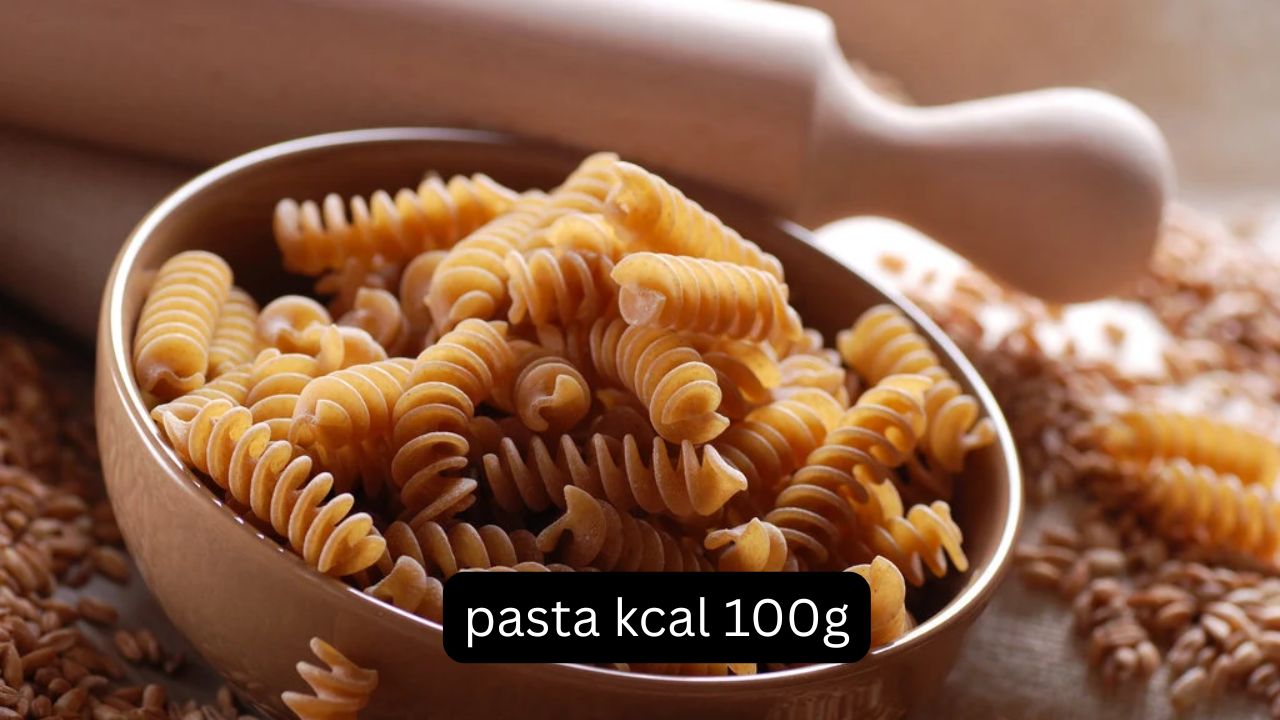
If you are tracking calories, one of the easiest mistakes to make is weighing pasta without checking whether it is dry or cooked. A label may show around 350 kcal per 100 g of dry pasta, while 100 g of cooked pasta can contain only around 130–160 kcal because it absorbs water during cooking. That difference can completely change how you record a meal.
So, how many calories are in pasta kcal 100g? For ordinary dry wheat pasta, 100 g usually provides roughly 350–380 kcal, depending on the type and brand. Once cooked, 100 g is generally much lower in calories by weight because water increases the pasta’s weight without adding calories.
This guide explains the difference between dry and cooked pasta, how many calories are in common portions such as 75 g, and what changes with wholegrain, orzo and chickpea pasta. It also looks at popular searches such as Gigi Hadid pasta and Vapiano pasta, where the sauce and portion size can make a much bigger difference than the pasta itself.
How many kcal are in 100g of pasta?
For standard dried pasta made from durum wheat and water, a useful general estimate is:
| Pasta amount | Approximate calories |
|---|---|
| 100 g dry pasta | 350–380 kcal |
| 75 g dry pasta | 260–285 kcal |
| 50 g dry pasta | 175–190 kcal |
| 100 g cooked pasta | 130–160 kcal |
| 150 g cooked pasta | 195–240 kcal |
| 200 g cooked pasta | 260–320 kcal |
These figures are estimates rather than universal values. Different pasta brands can have slightly different calorie counts because of their ingredients and production methods.
The most important point is not to compare 100 g dry pasta directly with 100 g cooked pasta. They represent different amounts of the original product.
Why does cooked pasta have fewer kcal per 100g?
Pasta absorbs water during cooking.
Imagine you start with 100 g of dry pasta containing approximately 360 kcal. After boiling, that pasta might weigh around 230–250 g, depending on how much water it absorbs.
The calories have not disappeared.
Instead, the same approximately 360 kcal are distributed across a larger cooked weight.
For example, if 100 g dry pasta becomes 240 g cooked pasta:
360 kcal ÷ 240 g × 100 = 150 kcal per 100 g cooked pasta.
This is why both of these numbers can be correct:
- 100 g dry pasta ≈ 360 kcal
- 100 g cooked pasta ≈ 150 kcal
They are simply measuring pasta at different stages.
Pasta kcal cooked: how many calories are in cooked pasta?
When people search for pasta kcal kokt, they are usually looking for the calorie content of boiled or cooked pasta.
A reasonable everyday estimate for plain cooked wheat pasta is around 130–160 kcal per 100 g.
However, cooked weight can vary significantly. Pasta cooked for a shorter time may retain less water and weigh less than pasta cooked until very soft. The shape also matters because different pasta types can absorb different amounts of water.
For accurate calorie tracking, the simplest approach is to follow the method used by your nutrition app or food package.
If the package gives nutrition information for dry pasta, weigh it dry.
If your database specifically provides nutrition information for cooked pasta, weigh it after cooking.
Avoid mixing the two methods.
How many kcal are in 75g of pasta?
A 75 g portion is common when someone measures a moderate serving of dry pasta.
If your pasta contains approximately 360 kcal per 100 g:
75 g × 3.6 kcal per gram = approximately 270 kcal.
So, 75 g dry pasta is usually around 260–285 kcal.
Once cooked, that 75 g of dry pasta could weigh considerably more because of absorbed water.
This leads to an important practical insight: the calorie value of the original 75 g does not change just because the pasta becomes heavier after cooking.
If you are preparing a meal and want predictable portions, weighing the pasta dry is often easier.
What about 1 portion of pasta?
There is no single universal definition of 1 portion of pasta.
A recipe might call 75 g a portion, another might use 80 g, while a restaurant could serve substantially more.
For dry pasta, these are useful reference points:
- 50 g: small portion
- 75 g: moderate portion
- 80–85 g: common everyday serving
- 100 g: large dry portion
But portion size should also reflect what is served with the pasta.
A 75 g serving with vegetables and a protein source can produce a very different meal from 100 g pasta covered in a rich cream sauce and cheese.
When estimating the calories of a pasta meal, therefore, don’t stop at the pasta.
Count the:
- Olive oil
- Butter
- Cream
- Cheese
- Meat
- Pesto
- Tomato-based sauces
- Nuts
- Other toppings
These ingredients can contribute more calories than the pasta itself.
Wholegrain pasta kcal per 100 gram
Wholegrain pasta is made using whole-grain ingredients and generally contains more fiber than conventional refined pasta.
For wholegrain pasta kcal per 100 gram, a typical dry value is around 340–370 kcal, although the exact number depends on the brand.
Interestingly, wholegrain pasta is not necessarily dramatically lower in calories than regular pasta.
The bigger nutritional difference is often its fiber content and overall nutrient profile.
That means choosing wholegrain pasta should not necessarily be based on expecting a huge calorie reduction.
Instead, consider it when you want:
- More fiber
- A more filling meal
- A nuttier flavor
- A firmer texture
- A different nutritional profile
Is wholegrain pasta better for calorie control?
It can be useful because meals containing more fiber may feel more satisfying, but calories still matter.
A bowl containing 100 g wholegrain pasta plus several tablespoons of oil can easily contain more calories than a smaller serving of regular pasta with vegetables.
The complete meal matters more than the label on the pasta alone.
Orzo pasta kcal: is it different?
Orzo looks like rice but is actually a type of pasta.
Its calorie content is therefore broadly similar to other dried wheat pastas.
As a general estimate, 100 g dry orzo can contain around 340–370 kcal.
Cooked orzo is much lower per 100 g because it absorbs water.
One common mistake is comparing a dry rice serving with a cooked orzo serving simply because they look similar on the plate. Their weights and preparation methods need to be considered before comparing calories.
If you are using orzo in soups or salads, the final calorie count also depends heavily on what else goes into the recipe.
Chickpea pasta kcal: is it lower in calories?
Chickpea pasta is made primarily from chickpea flour and is often chosen because it provides more protein and fiber than conventional pasta.
Its calorie content can be surprisingly similar to ordinary pasta.
Depending on the product, 100 g dry chickpea pasta may contain roughly 330–380 kcal.
So don’t assume that a pasta made from chickpeas automatically contains fewer calories.
The advantage may instead come from its nutritional composition.
Chickpea pasta can provide:
- More plant-based protein
- More fiber
- A different carbohydrate profile
- A useful option for people looking for legume-based foods
Always check the package when accuracy matters because chickpea pasta recipes differ considerably between brands.
Gigi Hadid pasta kcal: why the recipe matters
The Gigi Hadid pasta recipe became popular because of its creamy, spicy tomato-based sauce. When people search for “Gigi Hadid pasta kcal,” they are usually trying to estimate the calories in the complete recipe rather than plain pasta.
This is where calorie calculations can become misleading.
The pasta itself might contribute a few hundred calories, but ingredients such as:
- Olive oil
- Butter
- Heavy cream
- Parmesan
- Tomato paste
can significantly increase the total.
For example, two people could use the same amount of pasta but prepare the sauce differently. One might use a small amount of cream and oil, while another could use considerably more.
Their final meals would therefore have very different calorie totals.
The most reliable way to calculate a homemade Gigi Hadid-style pasta is to add the calories of every ingredient used, then divide the total by the number of servings.
Vapiano pasta kcal: why restaurant portions are harder to estimate
Searches for Vapiano pasta kcal are more difficult because restaurant meals can vary according to the dish, portion, sauce and preparation.
A plain tomato pasta and a creamy pasta with cheese will obviously have different calorie values.
Restaurant pasta can also contain more oil than you might expect. Oil is particularly important because even a relatively small amount adds a substantial number of calories without greatly increasing the food’s volume.
When estimating a restaurant pasta meal, look at the complete dish rather than assuming:
pasta calories = meal calories.
The sauce and added fats can make a significant difference.
If official nutritional information is available for the exact dish, use that rather than relying on a generic pasta database.
Dry vs cooked pasta: the easiest way to avoid mistakes
If you’re counting calories regularly, this simple system prevents many errors.
Method 1: Weigh it dry
Suppose your pasta label says:
360 kcal per 100 g
You weigh 75 g before cooking.
Your pasta contains approximately:
270 kcal.
After boiling, it might weigh 180–200 g, but the calorie total remains approximately 270 kcal.
Method 2: Weigh it cooked
This method requires nutrition information specifically for cooked pasta or a reliable conversion based on the pasta you prepared.
For example, if cooked pasta contains approximately 150 kcal per 100 g, then:
- 100 g cooked = 150 kcal
- 150 g cooked = 225 kcal
- 200 g cooked = 300 kcal
The problem occurs when someone weighs 200 g cooked pasta but records it as 200 g dry pasta.
That can substantially overestimate calories.
Three practical insights people often miss
1. Cooking changes weight, not the original calories
Water is the biggest reason cooked pasta appears to have fewer calories per 100 g.
The pasta has not become a low-calorie food through boiling. It has simply absorbed water.
2. Pasta shape can change the cooked weight
Two types of pasta can start with the same dry weight but finish at different cooked weights.
That happens because their shape, thickness and cooking characteristics influence water absorption.
This is one reason generic “one cup of cooked pasta” measurements can be less precise than weighing your own food.
3. Sauce can matter more than the pasta
If your goal is to control the calories of a pasta meal, reducing the pasta by a small amount may not make as much difference as controlling added oil, cream, cheese or pesto.
For example, cutting 10 g of dry pasta removes only around 35–38 kcal when using a 360–380 kcal-per-100-g pasta. A generous addition of oil can add considerably more.
This is useful when adjusting meals without making them feel dramatically smaller.
How to make a lower-calorie pasta meal without making it boring
You don’t necessarily need to eliminate pasta.
Instead, build the meal around the pasta.
Try this approach:
- Measure your pasta portion.
- Add a generous amount of vegetables.
- Include a protein source.
- Use oil or creamy ingredients deliberately rather than pouring them freely.
- Add herbs, garlic, chili, pepper or spices for flavor.
- Measure calorie-dense toppings such as cheese and pesto.
For example, instead of making a huge bowl of pasta with a heavy sauce, you could use a moderate pasta serving with tomatoes, spinach, mushrooms and a protein source.
The result can still feel like a proper pasta meal while giving you more volume and variety.
Common mistakes when counting pasta calories
Mistake 1: Confusing dry and cooked weight
This is probably the biggest problem.
Always check whether the calorie information refers to the pasta before or after cooking.
Mistake 2: Assuming all pasta has identical calories
Different products can vary.
Egg pasta, wholegrain pasta, chickpea pasta and specialty products may have different nutritional values.
Mistake 3: Forgetting cooking ingredients
Plain pasta and pasta cooked with oil or butter are not nutritionally identical.
Track added ingredients separately when accuracy matters.
Mistake 4: Treating restaurant portions like measured home portions
A restaurant serving may contain substantially more pasta, sauce or oil than you would normally use at home.
Mistake 5: Relying on “one portion” without checking the actual weight
A portion is a serving concept, not a universal measurement.
If you’re tracking closely, grams are more useful.
FAQ
How many kcal are in 100g of dry pasta?
Most ordinary dried wheat pasta contains approximately 350–380 kcal per 100 g. The exact number depends on the brand and ingredients, so the package label should be used when precision is important. This value applies to dry pasta, not cooked pasta.
How many calories are in 100g of cooked pasta?
Plain cooked pasta commonly contains around 130–160 kcal per 100 g. The difference from dry pasta is mainly caused by water absorbed during boiling. The longer or differently a pasta is cooked, the more its final weight can vary.
How many kcal are in 75g of dry pasta?
If the pasta contains 360 kcal per 100 g, then 75 g provides approximately 270 kcal. Depending on the product, a realistic range is roughly 260–285 kcal. Cooking changes the weight but does not remove those original calories.
Is wholegrain pasta lower in calories than regular pasta?
Not necessarily. Wholegrain pasta often has a calorie value broadly similar to conventional pasta, although its fiber and nutritional composition can differ. If you’re choosing it for calorie control, consider the complete meal and portion size rather than expecting a large calorie difference.
How many calories are in chickpea pasta per 100g?
Chickpea pasta commonly provides roughly 330–380 kcal per 100 g when dry, depending on the brand. It may offer more protein and fiber than conventional pasta. Always check the specific nutrition label because formulations vary.
Why does 100g cooked pasta have fewer calories than 100g dry pasta?
Dry pasta absorbs water during cooking, increasing its weight without adding calories. As a result, the calories are spread across a larger amount of food. This makes 100 g cooked pasta lower in calories than 100 g dry pasta even though the pasta itself has not lost most of its calories.
Final takeaway
For a quick estimate, 100 g of dry pasta is usually around 350–380 kcal, while 100 g of cooked pasta is commonly around 130–160 kcal. The crucial difference is water absorption, so always know whether you’re weighing your pasta before or after cooking.
For everyday calorie tracking, measuring dry pasta can be the simplest approach. A 75 g dry serving will generally provide around 260–285 kcal, while wholegrain, orzo and chickpea pasta can have similar overall calorie ranges despite having different nutritional profiles.
And when you’re calculating a complete dish—especially something like Gigi Hadid-style pasta or a restaurant meal such as Vapiano pasta—remember that the sauce, oil, cream and cheese can change the final calorie count substantially.
The most useful habit is simple: check the label, measure the portion, and count the whole meal rather than looking at pasta alone.
