
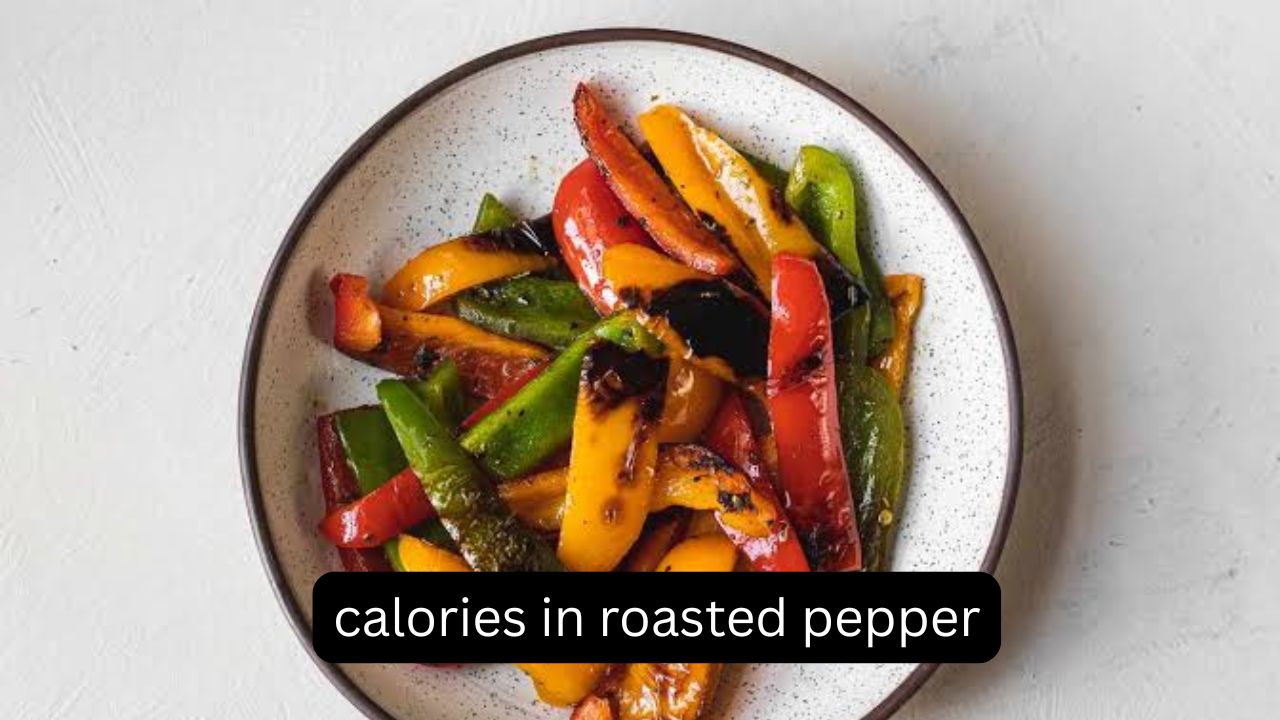
If you are trying to eat lighter meals, roasted peppers can be surprisingly useful. They have a naturally sweet, smoky flavor, but they are still relatively low in calories when prepared without much oil. The tricky part is that calories in roasted pepper can change significantly depending on the pepper itself and how it is cooked.
A plain roasted bell pepper contains mostly water, carbohydrates, and a small amount of protein, with very little fat. However, turning it into roasted pepper pasta sauce, roasting it with olive oil, or blending it into a creamy soup can make the final dish much more calorie-dense.
This guide explains how many calories roasted peppers contain, how roasting affects their nutrition, and how they compare with other common ingredients. You will also learn how to make roasted pepper pasta sauce and roasted pepper and tomato soup without accidentally turning a low-calorie vegetable into a high-calorie meal.
How Many Calories Are in Roasted Pepper?
A typical medium red bell pepper contains roughly 35–45 calories before additional ingredients are added. Roasting does not magically add calories to the pepper itself. Instead, heat removes some water, which can make the pepper more concentrated by weight.
Approximate values for plain roasted bell pepper are:
| Amount | Approximate calories |
|---|---|
| 50 g roasted pepper | 15–20 |
| 100 g roasted pepper | 30–40 |
| 1 medium roasted bell pepper | 35–50 |
| 1 large roasted bell pepper | 50–70 |
| 1 cup sliced roasted pepper | Around 45–60 |
These numbers are estimates because pepper size, variety, moisture loss, and cooking method all affect the final weight.
Does Roasting Increase Calories?
Roasting itself does not substantially increase the calorie content of a pepper. The important distinction is weight versus total pepper.
For example, imagine a pepper starts at 150 g and loses water during roasting. It may weigh considerably less afterward, while containing approximately the same total calories. Therefore, 100 g of roasted pepper can appear more calorie-dense than 100 g of raw pepper simply because the roasted portion contains less water.
The bigger calorie change usually comes from what you add during cooking.
Olive oil, butter, cheese, cream, sauces, and nuts can contribute far more calories than the pepper itself.
Why Roasted Red Pepper Is Naturally Low in Calories
Bell peppers are an excellent example of a food that provides plenty of volume without a large calorie load.
A roasted pepper can add:
- Sweetness without added sugar
- Strong flavor without many calories
- Vitamin C
- Carotenoids
- Fiber
- Potassium
- Water and food volume
Red peppers are particularly useful when you want a satisfying meal but do not want to rely heavily on high-calorie sauces.
One practical trick is to roast several peppers at once and keep them refrigerated. They can then be added to eggs, sandwiches, grain bowls, salads, pasta, wraps, or soups throughout the week.
Calories in Roasted Pepper With Olive Oil
This is where calorie calculations often become misleading.
The pepper may contain only around 40 calories, but one tablespoon of olive oil adds roughly 120 calories.
So a simple dish containing:
- 1 medium roasted pepper: ~40 calories
- 1 tablespoon olive oil: ~120 calories
- Garlic and herbs: ~5–10 calories
could contain approximately 165–170 calories.
The lesson is not that olive oil is unhealthy. Rather, oil is calorie-dense, so measuring it matters when your goal is calorie control.
A Simple Lower-Calorie Roasting Method
For a lighter preparation:
- Cut the pepper into large pieces.
- Remove the seeds and stem.
- Toss with a small amount of oil rather than pouring oil directly over the tray.
- Add garlic, black pepper, paprika, oregano, or chili flakes.
- Roast until the edges become browned and slightly charred.
- Use the roasted pepper immediately or refrigerate it for later.
A teaspoon of oil provides dramatically fewer calories than a tablespoon, while still helping with browning and flavor.
Roasted Pepper Pasta Sauce: How Many Calories?
Roasted pepper pasta sauce can be very light or surprisingly rich depending on the recipe.
A simple sauce made from roasted red peppers, garlic, onion, vegetable stock, herbs, and a small amount of olive oil can be relatively low in calories.
A creamy version containing heavy cream, butter, Parmesan, or large amounts of cheese can contain several times as many calories.
For example, a lighter sauce might contain approximately:
- 2 roasted red peppers: 80 calories
- 1 teaspoon olive oil: 40 calories
- Garlic and onion: 30–40 calories
- Vegetable stock: 10–20 calories
- Herbs and seasoning: minimal calories
That makes the entire sauce roughly 160–180 calories, before adding pasta.
How to Make Roasted Pepper Pasta Sauce Lighter
If you want a creamy texture without relying heavily on cream, blend roasted peppers with one of these:
- Vegetable stock
- Low-fat Greek yogurt
- A small amount of cottage cheese
- White beans
- Unsweetened milk
- A modest amount of Parmesan
White beans are an especially useful option because they add body and fiber while keeping the sauce thick.
Another useful technique is to reserve some pasta water. Its starch helps emulsify the sauce, allowing a small quantity of oil or cheese to spread further through the dish.
Calories in Roasted Pepper Pasta
The sauce is only part of the calorie calculation.
A normal serving of cooked pasta can contribute around 200–250 calories or more, depending on the portion size. Add a generous serving of roasted pepper sauce and cheese, and the complete meal may easily reach 400–600 calories.
If you are trying to reduce calories, portion control is usually more effective than eliminating roasted pepper sauce.
Try building the bowl around:
- A moderate serving of pasta
- Plenty of roasted peppers
- Other vegetables
- A controlled amount of cheese
- A measured amount of oil
This creates a meal that still feels substantial rather than simply reducing the food until the plate looks empty.
Roasted Pepper and Tomato Soup Calories
Roasted pepper and tomato soup can be a very calorie-friendly meal.
Both tomatoes and bell peppers contain substantial water and relatively few calories. A basic soup made with roasted peppers, tomatoes, onion, garlic, vegetable stock, and herbs can often remain below 150 calories per serving, depending on serving size and added oil.
However, toppings can change the calculation quickly.
Common additions include:
- Cream
- Coconut milk
- Cheese
- Croutons
- Butter
- Olive oil
- Bread
A soup that begins as a 100-calorie bowl can become a much more substantial meal after several calorie-dense toppings are added.
How to Make Roasted Pepper and Tomato Soup More Filling
If soup is your main meal, calories are not the only consideration. You also want enough protein and fiber to avoid becoming hungry shortly afterward.
Consider adding:
- White beans
- Lentils
- Chickpeas
- Greek yogurt
- Shredded chicken
- A small amount of cheese
Blending beans directly into the soup can make it thicker and more filling without requiring large amounts of cream.
Roasted Pepper Soup: A Basic Calorie Breakdown
A simple roasted pepper soup might contain:
- Roasted red peppers
- Tomatoes
- Onion
- Garlic
- Vegetable stock
- Herbs
- Small amount of olive oil
Depending on the quantities, a bowl may contain approximately 100–180 calories.
A creamy restaurant-style version can be much higher because restaurants may use cream, butter, cheese, or generous amounts of oil.
This is one reason homemade soup can be easier to track: you know exactly what went into the pot.
Raw vs Roasted Pepper: Which Has More Calories?
The difference is smaller than many people expect.
| Feature | Raw pepper | Roasted pepper |
|---|---|---|
| Calories | Low | Low |
| Water content | Higher | Lower |
| Flavor | Fresh and crisp | Sweet and smoky |
| Texture | Crunchy | Soft |
| Calorie density by weight | Lower | Can be slightly higher |
| Added calories | Usually none | Depends on oil or other ingredients |
Roasting removes water, so the pepper can become more calorie-dense per 100 grams.
But that does not mean roasting makes the pepper inherently fattening.
The cooking method and added ingredients matter much more.
Does the Color of the Pepper Matter?
Yes, but not dramatically for calories.
Green, yellow, orange, and red bell peppers have slightly different nutritional profiles because they represent different stages and varieties of ripeness.
Red peppers tend to taste sweeter, which makes them particularly good for sauces and soups. Green peppers have a more vegetal and sometimes slightly bitter flavor.
From a calorie perspective, however, all are relatively low-calorie vegetables.
Choosing between them is therefore more about flavor, texture, availability, and nutritional variety than about trying to find a dramatically lower-calorie pepper.
Three Less-Obvious Things That Affect Calorie Tracking
1. Water loss can make roasted food look more calorie-dense
This is an important point when weighing food.
If you weigh a pepper before roasting and then compare it with the roasted weight, the numbers can look confusing because some of the water has disappeared.
The pepper has not suddenly created calories. It has simply lost weight through water evaporation.
2. Oil absorbed during roasting is easy to underestimate
A quick drizzle of oil can become several teaspoons across a tray. If you are carefully tracking calories, measuring oil before adding it is much more reliable than estimating it visually.
This is especially important with roasted vegetables because their softened surface can retain oil.
3. The sauce often matters more than the pepper
When someone asks how many calories are in roasted pepper pasta or soup, the pepper itself is rarely the main source of calories.
Cream, cheese, oil, pasta, bread, and other ingredients usually have a much larger impact.
That is why looking at the whole recipe is more useful than focusing on the calories of one vegetable.
Common Mistakes When Counting Roasted Pepper Calories
Mistake 1: Assuming all roasted pepper dishes are low-calorie
The pepper may be low in calories, but a sauce containing cream, butter, cheese, and oil can be quite energy-dense.
Always evaluate the complete recipe.
Mistake 2: Forgetting cooking oil
Oil is one of the easiest ingredients to overlook.
If you are tracking calories, measure it rather than relying on the phrase “a little olive oil.”
Mistake 3: Comparing raw and cooked weights directly
Roasting changes water content. Comparing 100 g raw pepper with 100 g roasted pepper can therefore be misleading.
Use the same preparation state when possible.
Mistake 4: Cutting calories so aggressively that the meal becomes unsatisfying
A very small bowl of pepper soup may technically be low-calorie but leave you hungry an hour later.
Adding protein, legumes, vegetables, or a sensible portion of whole grains can make the meal much more practical.
How to Use Roasted Peppers in a Lower-Calorie Diet
Roasted peppers work well because they can replace some higher-calorie ingredients while preserving flavor.
Try these combinations:
Breakfast: Add roasted peppers to scrambled eggs or an omelet.
Lunch: Use them in a chicken, bean, or tuna wrap.
Dinner: Blend them into a tomato-based pasta sauce.
Snack: Pair roasted pepper strips with hummus.
Soup: Combine roasted peppers and tomatoes with beans for a filling meal.
Grain bowl: Add peppers to rice, quinoa, chickpeas, and a lean protein.
The goal is not to make every meal extremely low in calories. It is to use flavorful, nutrient-rich ingredients so that a moderate-calorie meal still feels satisfying.
FAQ
How many calories are in one roasted red pepper?
One medium roasted red bell pepper typically contains around 35–50 calories when roasted without significant added oil. The exact number depends on the pepper’s size and how much water it loses during cooking. Oil or other ingredients should be counted separately.
Is roasted pepper good for a low-calorie diet?
Yes, plain roasted peppers can fit easily into a low-calorie eating pattern. They provide flavor, volume, fiber, and several micronutrients for relatively few calories. The main thing to watch is calorie-dense additions such as oil, cheese, cream, and sauces.
How many calories are in roasted pepper pasta sauce?
A simple homemade roasted pepper pasta sauce may contain roughly 40–90 calories per serving, depending on the amount of pepper and oil used. Cream, cheese, nuts, or larger quantities of oil can raise the total considerably. The pasta itself must also be included when calculating the calories of the complete meal.
Is roasted pepper and tomato soup low in calories?
A basic roasted pepper and tomato soup can be relatively low in calories, often around 100–180 calories per bowl, depending on the recipe and serving size. Cream, butter, cheese, and oil can substantially increase the total. Adding beans or another protein source can make the soup more filling.
Does roasting peppers add calories?
Roasting itself does not add meaningful calories to a pepper. It mainly removes water, which can make the pepper appear more calorie-dense when measured by weight. Added ingredients, especially cooking oil, are usually responsible for most additional calories.
Final Thoughts
Roasted peppers are naturally low in calories, but the final calorie count depends heavily on preparation. A plain roasted pepper may provide only around 35–50 calories, while a creamy roasted pepper pasta sauce or soup can contain considerably more.
The most useful approach is to look beyond the pepper itself. Measure calorie-dense ingredients such as oil, cream, cheese, and pasta, while using roasted peppers generously for flavor and volume.
If you want an easy way to make everyday meals more flavorful without relying on heavy sauces, roasted peppers are one of the simplest ingredients to keep ready in the kitchen.
