
The biscuit tradition in Britain has always favoured the thin and the crisp. The digestive, the rich tea, the hobnob: these are biscuits defined by their snap, their dunkability, and their restraint. They are fine biscuits. They are not exciting biscuits. And for a generation that grew up photographing its food before eating it and sharing those photographs with an audience, restraint in baking was always going to struggle to hold its cultural ground.
The New York cookie arrived into this landscape like a deliberate counterargument. Thick enough to require two bites. Chewy in a way that required real effort from the jaw. Crisp at the edges, soft in the centre, and loaded with inclusions that made the cross-section as visually interesting as the decorated top. It was not subtle and it was not trying to be, which is precisely why it photographed so well and why it spread so quickly from the bakery counters of Manhattan to the gifting shelves and artisan bakeries of every city that had access to Instagram and an appetite for something more dramatic than a digestive.
What Defines a New York-Style Cookie
The New York cookie is not simply a large biscuit, and understanding what actually makes it different from a conventional soft cookie or a British biscuit explains why the style requires specific technique rather than simply more dough.
Thickness is the most immediately visible characteristic, but it’s a consequence of technique rather than a goal in itself. A New York cookie achieves its height through a combination of high butter content, precise flour ratios, chilling the dough before baking, and a baking temperature and time calibrated to set the edges while leaving the centre underdone at the point the cookie is removed from the oven. The residual heat of the baking tray continues cooking the centre after removal, producing the soft, fudgy interior that defines the style. A cookie baked until it looks done in the centre in the oven is a cookie that will be overdone once it has cooled, which is the most common mistake in home attempts at the style.
The texture contrast between the crisp, slightly caramelised edge and the yielding, almost underbaked centre is the quality that most distinguishes a genuine New York cookie from other soft cookie styles. This contrast requires the butter to be at the right temperature at the point of mixing, the dough to be chilled for long enough, and the baking temperature to be high enough to set the edge quickly while the centre remains protected by the cookie’s mass. Each of these variables interacts with the others, which is why consistent results require either significant technique experience or a recipe that has been refined across enough baking iterations to have the variables balanced correctly.
The inclusions are where the flavour identity of the cookie is established, and they’re what distinguishes New York cookies from each other rather than from other cookie styles. Quality chocolate in significant quantities, whole chunks rather than chips, produces pockets of melted chocolate in the baked cookie that are visually dramatic when the cookie is broken and texturally significant in the eating. Other inclusions, caramelised biscuit, freeze-dried fruit, sprinkles, cream cheese, behave differently in the bake and require recipe adjustments that a cookie formulated for chocolate chunks doesn’t automatically accommodate.
How the Style Spread and Why It Resonated
The New York cookie’s journey from a specific bakery style to a global phenomenon followed the same path that most significant food trends have taken in the social media era: it photographed exceptionally well, it was shareable in a format that suited the platforms through which food culture travels, and it offered a quality of eating experience that justified the enthusiasm of the people sharing it.
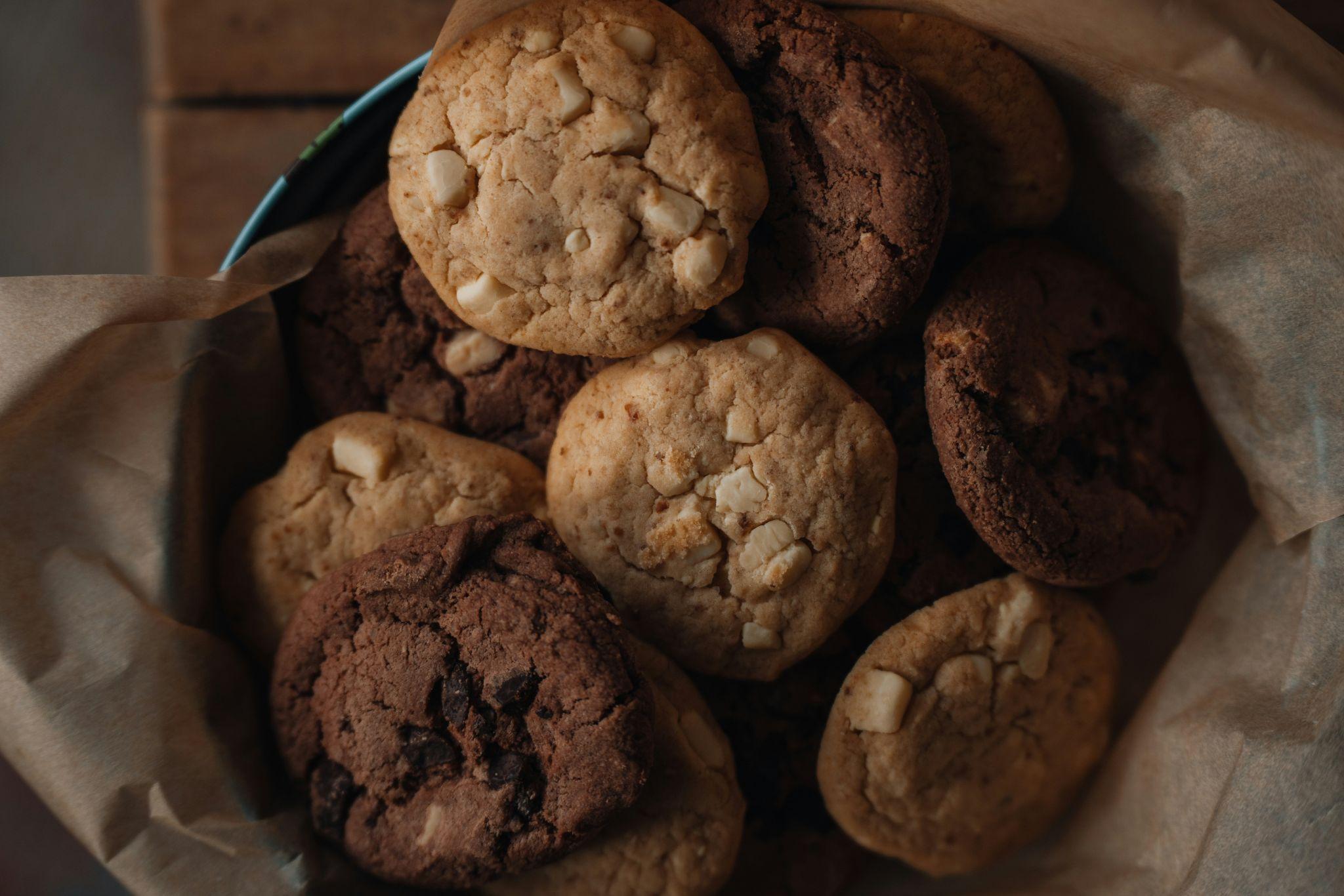
The visual quality of a New York cookie is not incidental to its cultural success. A perfectly baked New York cookie, with its cracked surface, its visible chocolate pools, its edge-to-centre colour gradient, and its thickness that communicates abundance rather than restraint, is one of the more photogenic food objects available at a bakery counter. The photograph doesn’t require styling, lighting, or a food photographer’s intervention to communicate appetite appeal. The cookie does that work itself.
The gifting dimension accelerated the spread significantly. A box of six or eight New York cookies in different flavours is a more interesting and more visually compelling gift than almost any other food item at a comparable price point, and the gifting culture that surrounds artisan food has given the format a distribution channel beyond bakery walk-in customers. The person who orders a box for a friend’s birthday, a colleague’s farewell, or a thank-you gesture is doing something the packaging and the product both support: creating a moment of genuine pleasure that a more conventional gift doesn’t produce.
The Flavour Variations That Have Extended the Format
The original New York cookie was a chocolate chip cookie scaled up and taken seriously, and chocolate chip remains the format’s most natural expression. But the format has proven versatile enough to carry a range of flavour variations that the original style’s structure supports without compromising the textural qualities that define it.
Double chocolate versions, where both the dough and the inclusions are chocolate-based, produce a more intense, fudgier result than the original and have become one of the most consistently popular variations wherever the format is sold. The chocolate dough base has a different baking behaviour from vanilla dough, browning faster and requiring adjusted temperature and timing to produce the same edge-to-centre contrast.
Biscoff as an inclusion and a flavour note has become one of the defining flavour additions of the current generation of New York cookies, combining the caramelised spiced biscuit flavour with the cookie’s own butterscotch notes in a way that feels both familiar and distinctive. Raspberry with white chocolate produces a tartness that cuts through the richness of the base in a way that pure chocolate variations don’t, and the colour of the freeze-dried raspberry pieces adds visual interest that photographs particularly well.
For readers in Australia who want to experience what the current standard of New York-style cookieslooks like from a specialist bakery, The Cupcake Room’s NY Cookie range includes Biscoff, Raspberry White Choc, Red Velvet, Birthday Party, Double Choc, and Choc Chip, available in build-your-own mix and match boxes of six or eight with same-day delivery across Sydney and pickup from their Leichhardt store within 24 hours.
Red velvet is a variation that the New York cookie format handles particularly well, with the slight cocoa note of the dough and the cream cheese element that some versions incorporate producing a result that feels distinct from both the chocolate variations and the original. Birthday cake or birthday party variations, with their vanilla base and festive sprinkle inclusions, have found a specific audience in celebration and gifting contexts where the visual reference to celebration is part of what the cookie is communicating.
Why the Format Has Staying Power
The New York cookie’s cultural persistence, now well into its second decade of mainstream presence, reflects something more durable than trend momentum. The format delivers a genuinely superior eating experience to most of what it has displaced, and eating experience rather than novelty is what keeps a food style relevant beyond its initial moment of discovery.
The thin biscuit tradition that the New York cookie has partially displaced in artisan bakeries and premium food retail was never primarily about eating experience. It was about convenience, consistency, and a cultural context in which restraint in baking was the norm rather than the exception. The New York cookie challenged that norm with a product that was unambiguously about the eating experience first, and the audience that responded to that challenge has stayed responsive because the experience continues to justify the response.
The format’s versatility has helped. A style that can carry a Biscoff variation as convincingly as a classic chocolate chip, and a Red Velvet as convincingly as a Double Choc, is a style that can keep generating reasons to return without requiring the format itself to change. The New York cookie’s core identity, its thickness, its chew, its textural contrast, is stable enough to anchor the variations without being undermined by them.
