

Most minimalist homes look beautiful on paper. But the moment the sun goes down, something feels off, and most people can’t quite put their finger on why. And nine times out of ten, it comes down to lighting.
This guide walks you through how to approach home lighting design the right way. You’ll learn how to layer your indoor lighting, pick the right fixtures for each room, and make intentional choices that actually complement your space.
We’re Made Minimal, a Brisbane-based furniture and lighting store, and we’ve helped a lot of people get this right. If your lighting has ever felt like an afterthought, read on.
Home Lighting Design: Start With the Mood, Not the Fixture
Frankly, most people shop for lighting the wrong way. They see a fixture they love, buy it, bring it home, and then wonder why the space still doesn’t feel right. Most of the time, the mood was never decided first, and that’s where everything falls apart.
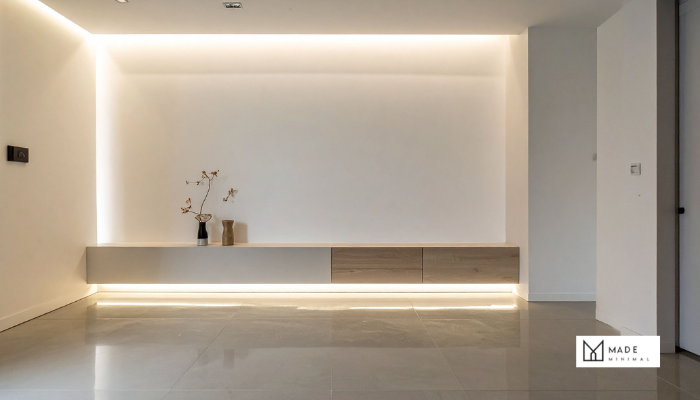
Before you look at a single bulb or fitting, ask yourself how you want each area to feel. Warm and relaxed? Bright and functional? Somewhere in between? That answer should drive every lighting decision you make, from the colour of the bulb to where the fixture sits in the room.
The takeaway: Good lighting considers how a space feels at 7 am, at midday, and again at 9 pm. Style counts, but feel counts just as much.
How to Layer Your Indoor Lighting the Right Way
Now, before you start shopping, layered lighting is the one change that stops a room from feeling flat or unfinished, and most people skip it entirely.
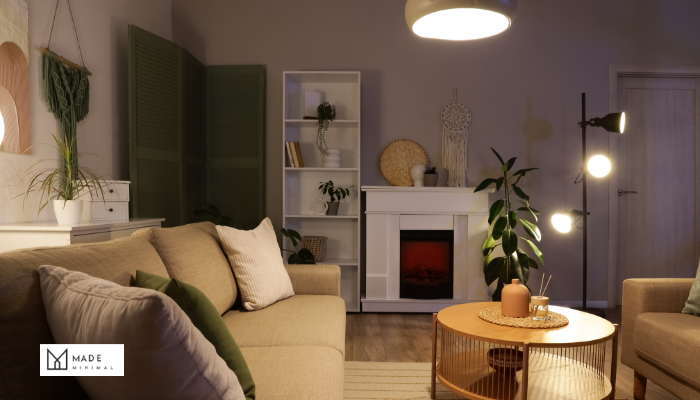
Instead of relying on one overhead light, you combine ambient lighting, task lighting, and accent lighting. That’s how a space starts to feel complete.
Let’s see how to build those layers the right way.
The Right Method of Using Natural Light Before Buying Anything
Before you spend a cent on fixtures, do you actually know how natural light moves through your home each day?
Most people don’t map this out, and they end up buying lighting that fights their natural light rather than filling in its gaps. Direct light in the morning hits differently than a soft glow in the late afternoon. Your artificial lighting should work around that, not against it.
You can consider frosted glass diffusers and sheer curtains to help spread natural light more evenly across a room. That cuts down on harsh shadows without blocking brightness altogether.
How to Choose the Right Light Sources per Room
Once you’ve mapped your natural light, choosing the right light sources for each room gets a lot easier.
Warm ambient lighting suits bedrooms and living areas, while cool task lighting works better in kitchens and home offices (yes, this includes your home office setup). Ceiling lights handle overall illumination, and wall lights add depth alongside them.
In fact, focused illumination from a bedside or desk fitting covers specific areas where you need to see clearly. The colour of your bulb (measured in Kelvin) changes how every surface in the area looks and feels.
Get Layered Lighting Without Overdoing It
Getting layered lighting right means your space can shift from bright and functional to calm and relaxed without changing a single bulb.
A minimalist approach calls for 2-3 light sources per room, placed at different heights and across different zones. And look, you don’t need to wire in overhead lighting across every corner either.
Track lighting works well for accent lighting in smaller spaces. On top of that, smart lighting lets you adjust brightness and colour temperature from your phone, which keeps energy consumption low without sacrificing flexibility.
How to Pick the Right Lighting for Your Living Spaces
Each living space in your home has a different job, and the lighting in each one should reflect that. Honestly, most people light their living room the same way they’d light an office, and the space ends up feeling cold and uninviting because of it.
Here’s a quick breakdown of how to approach colour temperature and right lighting for each area.
- Living Room: Warm ambient lighting in the 2700K range works best here, paired with a floor lamp near seating areas. That combination adds depth and warmth without flooding the whole room with harsh overhead light.
- Bedroom: Soft white pendant lights or table lamps in the 2700K range create the kind of warmth that ceiling lights simply can’t. Keep fittings low and close to where you actually use them, like beside the bed or over a reading chair.
- Home Offices: Cool task lighting in the 4000K range keeps you alert and focused. A desk lamp pointed directly at your work surface beats bright, flat ceiling lights every time, and reduces eye strain over long sessions.
- Dining Area: A pendant light centred over your dining table anchors the space and sets a warm, inviting mood. Hang it roughly 70-80cm above the surface for the best effect.
- Kitchen Island and Bathroom: Both need functional illumination first. Under-cabinet lights suit kitchens, and cool wall lights around 3000-4000K work well in bathrooms.
At the end of the day, the right lighting for each room comes down to one question: what do you actually do in this space?
Floor Lamps, Pendant Lights, or a Desk Lamp: How Do You Choose?
Not sure which fixture actually suits your space? The answer usually comes down to where you need the light and how much visual weight you want it to carry.
| Fixture | Best For | Light Type | Placement |
| Floor Lamp | Living rooms, reading corners | Ambient or accent | Corner or beside seating |
| Pendant Light | Dining tables, kitchen islands | Focused illumination | Centred overhead |
| Desk Lamp | Home offices, bedside tables | Task lighting | Work surface or bedside |
| Wall Lights | Hallways, bathrooms | Ambient or accent | Eye level or above |
| Table Lamps | Bedrooms, living rooms | Soft ambient | Beside furniture |
Based on what we see in our Brisbane showroom, pendant lights are the fixture people get wrong most often. They hang them too high, which washes out the focused illumination and turns a stylish centrepiece into just another ceiling light.
So instead, keep pendants low enough to cast dramatic shadows across the room. That’s what adds real visual interest, and it’s the reason the whole space feels more considered.
That said, floor lamps are easily the most flexible option for renters or anyone not keen on ceiling installations. And if your main concern is a home office or late-night reading spot, a good desk lamp will do more for you than any overhead fitting.
Why Your Interior Lighting Should Feel Minimal (And How to Get There)
With your layers sorted, the last step is making sure the overall look stays clean and intentional. Minimalist interior lighting goes beyond fixture count. It comes down to removing visual noise, so every fitting earns its place in the room.
Simple, modern finishes go a long way here. Matte black, brushed brass, and soft white fittings sit quietly against your décor without competing with it (a brushed brass pendant over a timber dining table never gets old, and that’s coming from experience).
Good lighting in a minimal space should illuminate without announcing itself. That’s the difference between a room that feels designed and one that just feels lit.
Your Home Deserves Better Lighting: Here’s Where to Start
The right lighting choices pull every room in your home together. Start with mood, build your layers, and let each fixture earn its place. That’s really all there is to it.
With that in mind, a warm, inviting atmosphere doesn’t come from spending more. It comes from being intentional about your interior lighting and knowing where each light source belongs.
We’d love to help you get there. Browse our full range of home lighting at Made Minimal and find fixtures that actually suit the way you live.
