
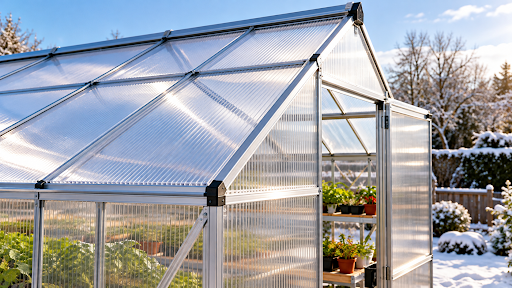
Every autumn, UK gardeners face the same problem: keeping a greenhouse warm enough through winter. Two solutions are most common. One is cheap and temporary. The other is a permanent fix.
Bubble wrap is the budget fix people reach for first. Twinwall polycarbonate is the long-term solution that solves the issue for good. This guide compares both options so you can choose the best fit for your budget.
Why a Greenhouse Needs Winter Insulation
A greenhouse loses heat rapidly when night temperatures drop. And when you have single-skin glazing or thin glass, it provides almost no protection. Within hours, the internal temperature matches the freezing air outside.
That sudden drop puts your tender crops at risk without a steady, frost-free space. Installing polycarbonate greenhouse panels keeps them safe by holding heat far better than old glass panes.
Here is what insulation protects against:
- Frost damage: cold snaps that kill tender plants overnight
- Temperature swings: rapid shifts that stress growth
- Heating costs: wasted energy if you run a greenhouse heater
- Lost growing time: a cold greenhouse sits empty through winter
To get this protection, you have two main routes. Let’s start with the cheapest and most common temporary fix.
Option One: Bubble Wrap
Bubble wrap is the classic cheap fix. You line the inside of the greenhouse with horticultural bubble wrap, clipped or taped to the frame. The trapped air in the bubbles adds a thin layer of insulation.
It has real appeal for a tight budget. The material costs little, and anyone can fit it in an afternoon. For a gardener wanting a quick patch before a cold spell, it does something.
The problems show over time, though. Here is the real picture:
- It blocks light, which plants need most in winter
- It looks untidy and sags as it ages
- It traps condensation against the frame
- It tears, perishes, and needs replacing most years
- It offers only modest insulation at best
Bubble wrap is a sticking plaster. It helps a little, for one season, and then the job comes round again.
Option Two: Twinwall Polycarbonate
Twinwall polycarbonate is a permanent upgrade. The sheet has two layers with a sealed air gap between them, and that gap is what insulates. It is the same principle as double glazing in a house.
You fit it in place of old glass or single glazing, and it stays put all year. A greenhouse polycarbonate sheet in twinwall keeps warmth in during winter and resists cracking in a hailstorm. It also diffuses light evenly, which plants prefer.
Key advantages of twinwall:
- Better insulation: the sealed air gap holds heat far longer
- Lets light through: diffused daylight with no heavy shading
- Durable: lasts for years, with no annual refit
- Shatterproof: far tougher than glass in wind and hail
- Tidy: a clean, permanent finish rather than sagging plastic
Twinwall costs more up front, but it pays for itself over multiple winters.
Bubble Wrap vs Twinwall: The Direct Comparison
Here is how the two stack up side by side:
| Feature | Bubble wrap | Twinwall polycarbonate |
| Cost | Very low upfront | Higher upfront |
| Lifespan | One season, maybe two | Ten years or more |
| Insulation | Modest | Strong, sealed air gap |
| Light transmission | Reduced, patchy | Good, evenly diffused |
| Condensation | Traps it on the frame | Drains and manages better |
| Appearance | Untidy, sagging | Clean and permanent |
| Effort | Refit most years | Fit once |
Bubble wrap wins on price for a single season. Twinwall polycarbonate wins on performance and durability for the long run.
How to Insulate a Greenhouse Properly
Knowing how to insulate a greenhouse well comes down to combining the right glazing with simple maintenance habits.
Follow these steps for the best result:
- Upgrade your glazing: Fitting twinwall sheets provides the biggest insulation boost.
- Stop draughts: Seal gaps around doors and roof vents.
- Insulate the floor: Lay down boards to stop cold rising from bare ground.
- Zone your space: Partition a small section to heat tender plants cheaply.
- Track temperatures: Use a thermometer to monitor frost risks.
Effective greenhouse insulation covers the whole structure. Fix the glazing and block draughts to keep your space warm with minimal effort.
Which Should You Choose?
Your choice depends on your long-term plans. If you are renting or testing a new setup, bubble wrap is a reasonable temporary choice. It gets you through one winter with minimal cost.
If you plan to keep your greenhouse for years, twinwall polycarbonate greenhouse panels do a proper job. You fit it once, get reliable warmth, and never deal with sagging plastic again.
Set Your Greenhouse Up for Winter
Both options provide heat retention, but they operate on totally different timelines. Bubble wrap may last a single season. Twinwall solves the problem for a decade.
Decide how long you plan to use your space. If you want a long-term setup, measure your frame and price up polycarbonate greenhouse panels in twinwall. Installing quality polycarbonate roofing sheets cut to size gives you a warm, frost-free greenhouse that lasts year after year.
FAQs
Is twinwall polycarbonate warmer than bubble wrap?
Yes, the sealed air gap in twinwall insulates better than bubble wrap’s thin trapped-air layer. Twinwall also holds its insulating value for years rather than degrading each season.
Can I use bubble wrap and twinwall together?
You can, though it is rarely needed. Twinwall insulates well on its own, so most gardeners add bubble wrap only to a single cold corner or an older glass section.
Does bubble wrap damage greenhouse plants?
Not directly, but it cuts the light plants need in winter and traps condensation. Both can slow growth and encourage mould if the greenhouse is poorly ventilated.
How thick should twinwall be for a greenhouse?
A 4mm or 6mm twinwall sheet suits most greenhouses, balancing light and insulation. Thicker 10mm sheets give more warmth where winter growing is the priority.
