
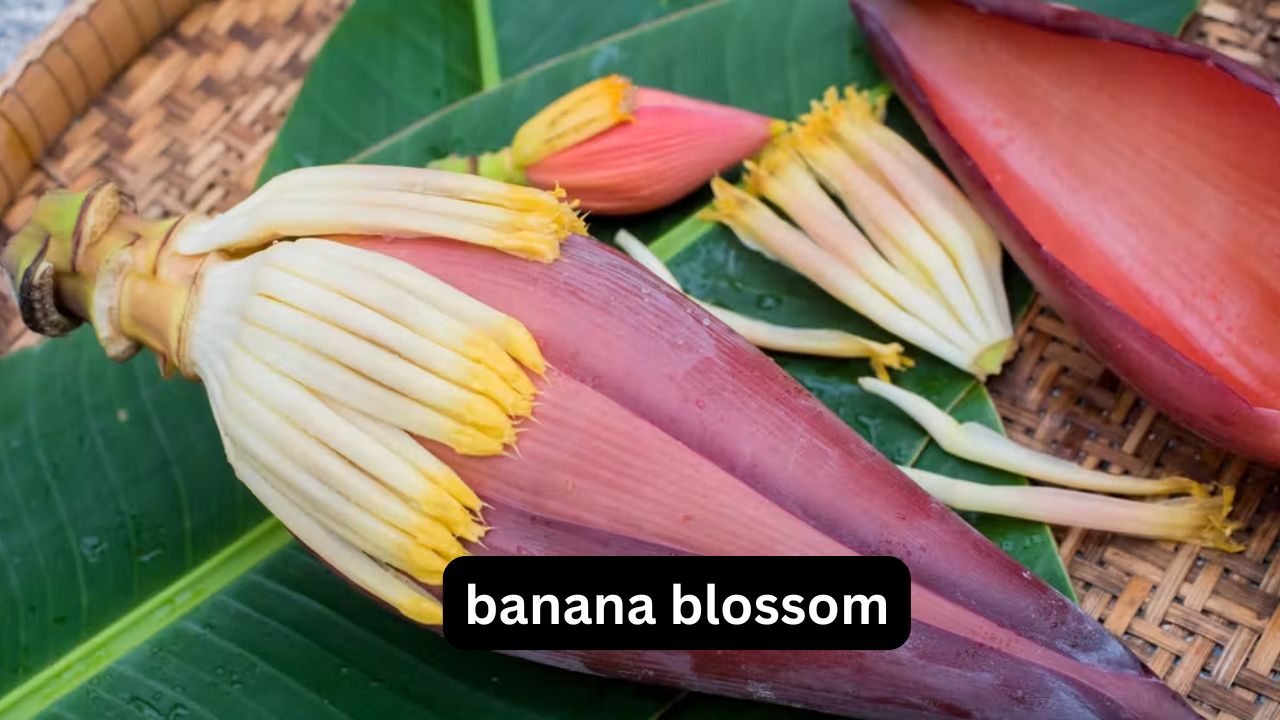
Have you ever cut open a banana plant and wondered what happens to the large purple flower hanging beneath the fruit? That flower is banana blossom, and it is much more useful than many people realize. It can be cooked as a vegetable, turned into a convincing plant-based alternative to fish, and even processed into fibers for experimental composite materials.
The challenge is knowing what to do with it. Fresh banana blossom can look intimidating, taste slightly bitter if prepared poorly, and have a texture that changes dramatically depending on how it is cooked. At the same time, interest in banana blossom fiber is growing because agricultural waste from banana cultivation contains useful plant fibers with potential engineering applications.
This guide explains what banana blossom is, how to prepare it, why banana blossom fish and chips works, how to make beer-battered banana blossom, and what research says about banana blossom fiber and composite durability. It also covers practical mistakes that can turn an otherwise excellent ingredient into a tough or bitter dish.
What Is Banana Blossom?
Banana blossom, also called banana flower or banana heart, is the large teardrop-shaped flower produced by a banana plant. It grows at the end of the fruiting stalk and is usually covered by overlapping reddish-purple outer bracts.
Inside those bracts are rows of small flowers. The tender inner portion is the part most commonly eaten.
Although bananas are usually grown for their fruit, the blossom has been used as food in several South and Southeast Asian cuisines for generations.
Its flavor is relatively mild. Depending on preparation, it can have notes that resemble artichoke, young bamboo shoots, or other fibrous vegetables.
Its most interesting characteristic, however, is texture.
The layered petals and inner flower structures can become flaky and slightly fibrous when cooked. That makes banana blossom particularly interesting for recipes designed to imitate the texture of fish.
Is banana blossom a fruit or vegetable?
Botanically, banana blossom is a flower, not a fruit or conventional vegetable.
In the kitchen, though, it is treated like a vegetable. It can be sliced into curries, salads, stir-fries, fritters, soups, and fried dishes.
That distinction matters less at the dinner table than its preparation. The edible inner sections are tender enough for cooking, while some of the tougher outer material needs to be removed.
What Does Banana Blossom Taste Like?
Banana blossom has a subtle flavor rather than a powerful one.
Raw or insufficiently prepared blossom can taste somewhat bitter or astringent. After soaking and cooking, the bitterness is usually reduced and the flavor becomes much milder.
A useful way to think about it is:
- Flavor: mild, earthy, slightly vegetal
- Texture: layered, fibrous, tender-crisp or flaky depending on cooking
- Aroma: relatively delicate
- Best flavor partners: citrus, vinegar, garlic, ginger, chili, herbs, spices and savory sauces
The texture is often more important than the flavor.
That is one reason it has become popular in plant-based cooking.
Why Is Banana Blossom Used as Fish?
Banana blossom is sometimes used as a plant-based fish substitute because its layered structure can break into pieces that feel surprisingly similar to flaky fish when cooked correctly.
It does not naturally taste like fish. The resemblance mainly comes from texture and from the seasonings used around it.
A successful preparation typically combines banana blossom with:
- A salty or savory marinade
- Acid such as lemon juice or vinegar
- Seaweed or other ingredients that contribute an ocean-like flavor
- A crisp coating
- Careful frying or baking
This combination creates the overall experience rather than relying on the blossom itself to reproduce the flavor of seafood.
Banana Blossom Fish and Chips: Why It Works
Banana blossom fish and chips has become a popular vegan interpretation of the British classic.
The basic idea is simple: prepare pieces of banana blossom as the “fish,” coat them in batter, fry until crisp, and serve with chips.
The contrast is what makes the dish work.
You get:
- Crisp batter outside
- Soft, layered blossom inside
- Salt and acidity from the seasoning
- Crunchy potatoes alongside
How to prepare banana blossom for fish
If using fresh banana blossom, remove the tougher outer bracts until you reach the more tender inner sections.
Slice or separate the edible pieces according to the recipe.
For canned banana blossom, drain it thoroughly before seasoning. Many canned products are already softer than fresh blossom, so excessive cooking can make them mushy.
A practical trick is to press out excess liquid before marinating. A waterlogged blossom can produce a weak batter and poor frying texture.
Beer-Battered Banana Blossom
One of the easiest ways to make banana blossom fish is with a beer batter.
Beer works well because carbonation can help produce a lighter, crispier coating. The goal is not to make the blossom taste strongly of beer but to create a thin shell that becomes crunchy in hot oil.
Basic beer-battered banana blossom method
You can use a simple batter made from:
- Plain flour
- Cornstarch
- Cold beer
- Salt
- Black pepper
- Optional garlic powder or paprika
Then:
- Drain and prepare the banana blossom.
- Season or marinate it.
- Pat it dry.
- Lightly coat it in flour.
- Dip it into the cold beer batter.
- Fry until golden and crisp.
- Drain briefly on a rack or paper towel.
- Serve immediately.
The cold batter is an important practical detail. A cold liquid combined with hot frying oil encourages a more pronounced temperature contrast, which can help create a crisp coating.
A common beer-batter mistake
Do not make the batter extremely thick.
A batter that resembles cake mixture can overwhelm the blossom and become heavy. For fish-and-chips-style cooking, a thinner coating generally gives a better balance between crispness and the soft interior.
An Easy Banana Blossom Recipe for Beginners
If you have never cooked banana blossom before, start with a simple fried version rather than an elaborate curry.
Simple crispy banana blossom
Ingredients
- 1 can banana blossom, drained
- 1 tablespoon lemon juice
- 1 tablespoon soy sauce
- 1 teaspoon seaweed flakes or finely crumbled nori
- Garlic powder
- Black pepper
- Flour
- Cornstarch
- Cold water or beer
- Oil for frying
Method
1. Drain thoroughly.
Squeeze or press the blossom gently to remove excess moisture without destroying its structure.
2. Season.
Combine lemon juice, soy sauce, seaweed and spices. Allow the blossom to absorb the flavors for around 15–30 minutes.
3. Make the coating.
Mix flour and cornstarch, then add enough cold liquid to form a pourable batter.
4. Coat lightly.
Shake off excessive batter. You want enough to cover the surface without creating a thick shell.
5. Fry.
Cook until the outside is crisp and golden.
6. Serve immediately.
Lemon, tartar sauce, pickles or a sharp herb sauce can balance the mild blossom.
The key lesson is simple: dry the blossom before battering it. This one step often makes a bigger difference than adding another spice.
Other Banana Blossom Recipes Worth Trying
Banana blossom is more versatile than fish-style recipes suggest.
Banana blossom curry
In South and Southeast Asian cooking, banana blossom can be combined with coconut milk, aromatics and spices.
The blossom absorbs surrounding flavors well, making it useful in strongly seasoned dishes.
Banana blossom salad
Thinly sliced blossom can be used in salads with acidic dressings, herbs, peanuts, chili and other crunchy ingredients.
Because raw blossom can be bitter, preparation is important.
Stir-fried banana blossom
Sliced blossom can be quickly cooked with garlic, ginger, chili, vegetables and a savory sauce.
Avoid prolonged high-heat cooking if you want it to retain some texture.
Banana blossom fritters
Small pieces can be mixed into a seasoned batter and fried as snacks or appetizers.
This is particularly useful when the blossom pieces are irregular and not suitable for making neat “fish” portions.
Fresh vs. Canned Banana Blossom
For most home cooks, canned banana blossom is considerably easier to work with.
| Feature | Fresh banana blossom | Canned banana blossom |
|---|---|---|
| Preparation | More involved | Very easy |
| Availability | Can be limited | Usually easier to find |
| Texture | Can be firmer | Generally softer |
| Bitterness | May be more noticeable | Often milder after processing |
| Convenience | Lower | High |
| Fish-style recipes | Excellent with careful preparation | Very practical |
Fresh blossom can be rewarding if you have access to a good-quality one, but canned blossom is often the better starting point for a first attempt.
How to Reduce Banana Blossom Bitterness
Bitterness is one of the most common complaints from first-time cooks.
Several factors can contribute to it, including the maturity of the blossom and how it is prepared.
Useful approaches include:
- Remove tougher outer bracts.
- Use the tender inner portions.
- Soak sliced blossom in water with lemon juice or vinegar.
- Drain thoroughly afterward.
- Cook with strongly flavored ingredients.
- Avoid using overly mature or damaged blossom.
Acid is particularly useful because it can brighten the flavor while helping balance some of the bitterness.
However, soaking for an unnecessarily long time can also wash out desirable flavor and soften the texture too much.
Banana Blossom Nutrition and Culinary Value
Banana blossom provides dietary fiber along with various micronutrients and plant compounds. Its nutritional profile depends on whether you are eating fresh blossom, canned blossom, or a heavily battered and fried preparation.
That last point is easy to overlook.
A plain banana blossom salad and deep-fried beer-battered banana blossom are not nutritionally equivalent simply because they begin with the same plant.
If your goal is a lighter meal, use steaming, sautéing or baking rather than deep frying.
Banana Blossom Fiber: A Different Use for the Plant
The phrase banana blossom fiber can be confusing because banana plants contain several different fibrous materials.
When researchers discuss banana fiber for materials applications, they often focus on fibers extracted from the pseudostem, leaves, or other structural parts of the banana plant, rather than the edible blossom itself.
These fibers are interesting because banana cultivation produces substantial agricultural biomass after harvesting.
Instead of treating everything left behind as waste, researchers are investigating whether plant fibers can become reinforcement in composite materials.
Why natural fibers are attractive
Plant fibers can offer several advantages:
- Renewable origin
- Low density
- Potentially lower material cost
- Biodegradability of the natural fiber component
- Agricultural waste utilization
- Useful stiffness-to-weight characteristics in suitable applications
But “natural” does not automatically mean “better.”
Fiber quality, moisture absorption, processing conditions, fiber orientation and the bond between fiber and resin all influence final performance.
What Does a Banana Fiber Composite Actually Do?
A fiber-reinforced composite combines a reinforcing material with a matrix.
In a polymer composite, for example, the banana-derived fiber provides reinforcement while the polymer binds the fibers together.
Think of it like concrete reinforced with steel, although the materials and mechanisms are very different.
The fibers can help carry mechanical loads, while the matrix holds them in position and transfers stress between them.
The performance depends heavily on the interface between the two.
Banana Blossom Fiber Composite Durability: What Studies Suggest
Research into banana-derived natural-fiber composites has generally shown that these materials can have useful mechanical properties, but durability is one of the major engineering challenges.
Natural fibers are hydrophilic, meaning they readily interact with moisture. When exposed to water or humid conditions, fibers can absorb moisture, swell and affect the bond between fiber and polymer.
Over time, that can contribute to:
- Reduced mechanical strength
- Dimensional changes
- Interface degradation
- Microcracking
- Changes in stiffness
- Greater sensitivity to environmental cycling
This is why a laboratory result should not automatically be interpreted as proof that a banana-fiber composite will survive years outdoors.
The important durability insight
One of the less obvious lessons from natural-fiber composite research is that fiber treatment can matter as much as fiber selection.
Chemical or physical treatments may alter the fiber surface, reduce unwanted moisture interaction and improve adhesion with certain polymer matrices.
However, treatment creates another trade-off: an aggressive treatment can damage the fiber itself or add processing complexity.
So the strongest material is not necessarily produced by simply adding more fiber or using the harshest treatment.
What Affects Banana Fiber Composite Durability?
Several variables need to be considered together.
1. Fiber content
Adding more fiber does not automatically increase strength. Once the matrix cannot adequately wet and bind the fibers, defects and poor interfaces can reduce performance.
2. Fiber orientation
Aligned fibers can provide substantially different mechanical behavior from randomly distributed short fibers.
3. Moisture
Water absorption is one of the most important concerns for natural-fiber composites.
4. Fiber-matrix adhesion
If the interface is weak, stress cannot transfer efficiently from the polymer to the reinforcing fibers.
5. Processing conditions
Temperature, pressure, curing and fiber preparation can all influence the final composite.
6. Environmental exposure
UV radiation, heat, humidity and repeated wet-dry cycles can produce different aging effects.
For a durability study, it is therefore much more meaningful to ask “durable under what conditions?” than simply asking whether banana fiber is durable.
Three Practical Insights Often Missed
The edible part and the structural fiber are not necessarily the same material
Searches for “banana blossom fiber” can blur together food and materials research. Banana plants contain different tissues with different fiber characteristics. A study on banana pseudostem fiber should not automatically be treated as a study on fibers extracted from the blossom.
Texture is a bigger advantage than flavor in fish recipes
Banana blossom does not naturally taste like cod or haddock. The convincing part of banana blossom fish is the layered, flaky texture combined with seasoning and a crisp coating.
Moisture is both a cooking issue and a materials issue
In the kitchen, excess moisture makes batter less crisp. In composites, moisture can affect the fiber-matrix interface and long-term performance. In both cases, controlling moisture is central to getting the desired result.
Common Banana Blossom Mistakes
Using the entire flower
Not every part of the blossom has the same tenderness. Tough outer material can produce an unpleasant texture.
Skipping the draining step
Wet banana blossom and crisp batter do not make a good partnership.
Over-marinating
A long marinade does not necessarily produce better flavor. Excess acid can alter texture.
Expecting it to taste exactly like fish
The objective is a convincing plant-based interpretation, not a perfect chemical copy of seafood.
Overcooking
Banana blossom can move from pleasantly flaky to soft and mushy if cooked for too long.
Treating natural-fiber research as universally applicable
A composite tested under controlled laboratory conditions may behave differently in real-world outdoor or humid environments. Durability claims should always be tied to the specific test conditions.
FAQ
Is banana blossom the same as banana flower?
Yes. Banana blossom, banana flower and banana heart are commonly used names for the flower structure produced by a banana plant. The tender inner portions can be eaten after suitable preparation. It is a flower botanically, although it is generally treated as a vegetable in cooking.
Can you eat banana blossom raw?
You can eat suitably prepared tender banana blossom raw, but it may have a noticeably bitter or astringent flavor. Thin slicing and soaking in acidulated water can help make it more pleasant. Many people prefer cooking it because heat softens the texture and makes the flavor easier to balance.
Does banana blossom really taste like fish?
Not by itself. Banana blossom has a mild vegetal flavor, while its layered texture can resemble flaky fish when prepared appropriately. Seaweed, lemon, savory seasonings and crispy batter provide much of the seafood-style character in recipes such as banana blossom fish and chips.
What is the best way to cook banana blossom?
There is no single best method. For beginners, frying or beer-battering is forgiving because the crisp coating adds flavor and texture. Curries, stir-fries and salads are also excellent options when you want the blossom itself to play a larger role.
Is banana blossom fiber strong and durable?
Banana-derived natural fibers can provide useful reinforcement in composite materials, but durability varies significantly with fiber type, treatment, matrix, fiber orientation and environmental exposure. Moisture is a particular concern because natural fibers can absorb water. Therefore, a banana-fiber composite should be evaluated under the actual temperature, humidity and loading conditions expected in use.
Is banana blossom sustainable?
It can be part of a more resource-efficient food system because the banana plant provides more than just fruit. Using the blossom as food and investigating agricultural fibers for material applications can help increase the value obtained from the plant. However, sustainability depends on cultivation, processing, transportation, treatment chemicals and end-of-life disposal—not simply on whether the material comes from a plant.
Final Thoughts
Banana blossom is a good example of an ingredient that looks far more complicated than it really is. Once you remove the tougher portions, control bitterness and manage moisture, it becomes surprisingly versatile.
For the kitchen, its greatest strength is texture. That makes it particularly effective in beer-battered preparations and banana blossom fish and chips, while curries, salads and stir-fries show that it is not limited to imitation seafood.
Its connection to natural-fiber research is equally interesting, but it requires careful terminology. Banana plants contain several potentially useful fiber sources, and the performance of a banana-based composite depends on much more than the plant itself. Moisture resistance, fiber treatment, orientation and fiber-matrix adhesion all influence durability.
If you’re trying banana blossom for the first time, start simple: drain it well, balance its mild bitterness with acid and seasoning, and don’t bury its texture under an excessively thick batter. That approach gives you a much better idea of why this unusual part of the banana plant has attracted attention both in the kitchen and beyond it.
