
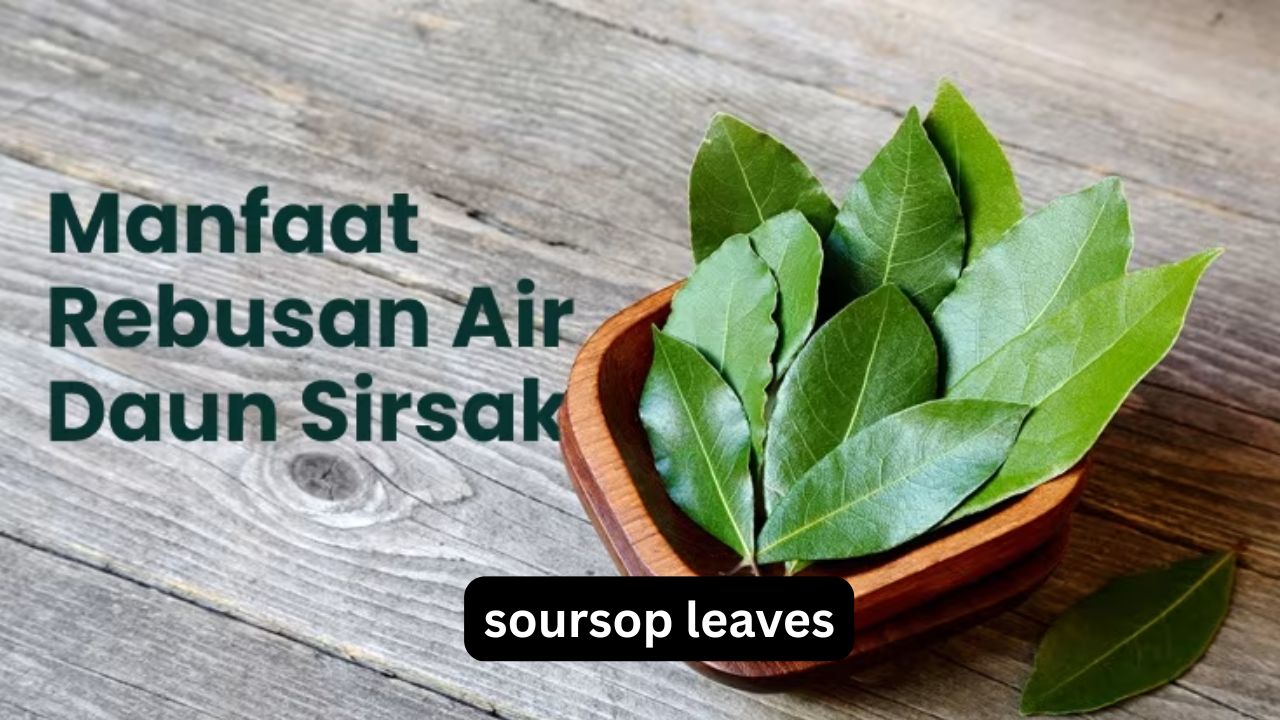
If you have searched for soursop leaves benefits, you have probably seen long lists claiming that these leaves can help with everything from diabetes and inflammation to cancer. That can make it difficult to know what is genuinely supported by research and what is simply traditional or promotional advice.
Soursop leaves come from Annona muricata, also called graviola or guanabana. They have been used traditionally in teas and other preparations, and researchers have investigated compounds in the leaves for antioxidant, anti-inflammatory, antimicrobial, blood-sugar-related and anticancer activity. However, much of that research comes from laboratory or animal studies rather than large human clinical trials.
This guide explains the potential soursop leaves benefits, how dried leaves are commonly prepared, what researchers actually know, and the important side effects and safety concerns. The biggest takeaway is simple: promising laboratory findings do not automatically mean that drinking soursop leaf tea will treat or prevent a disease.
What Are Soursop Leaves?
Soursop leaves are the green leaves of the tropical Annona muricata tree. The plant is commonly known as soursop, graviola or guanabana.
Traditionally, the leaves have been prepared as herbal infusions or teas. Modern research has identified numerous compounds in A. muricata, including acetogenins, flavonoids, alkaloids and phenolic compounds. These substances are part of the reason scientists are interested in the plant.
One important distinction is needed:
Eating soursop fruit is not the same as taking concentrated soursop leaf preparations.
Leaf teas, powders and extracts can contain different concentrations of active compounds. Commercial products can also vary considerably in quality and composition.
A 2023 analysis of seven commercially available A. muricata leaf products found substantial variation in annonacin concentration and other quality indicators. One product contained less than half of the amount stated on its label, while another exceeded a microbiological quality limit.
That variation matters when someone assumes that every packet of dried soursop leaves has the same strength.
15 Potential Soursop Leaves Benefits
The following are best understood as potential or researched effects, not 15 proven medical treatments.
1. Antioxidant activity
Soursop leaves contain several plant compounds with antioxidant activity. Laboratory studies have found that extracts can help neutralize reactive molecules under experimental conditions.
However, antioxidant activity in a test tube does not tell us exactly what happens after a person drinks the tea.
2. Anti-inflammatory potential
Soursop leaf extracts have demonstrated anti-inflammatory effects in laboratory and animal research. More recent experimental research has also reported anti-inflammatory activity from aqueous leaf extracts.
This is interesting scientifically, but it should not be interpreted as proof that soursop tea can treat arthritis or another inflammatory disease.
3. Possible blood-sugar effects
Researchers have investigated Annona muricata for possible effects on glucose metabolism. A systematic review found evidence of hypoglycemic activity across laboratory and animal research, but the studies differed considerably in their methods and extracts.
This creates a practical concern: someone taking diabetes medication could potentially experience an additive blood-sugar-lowering effect.
4. Potential blood-pressure effects
Animal research has reported blood-pressure-lowering effects from graviola. Because of this, soursop preparations could theoretically add to the effects of blood-pressure medication.
There is not enough reliable human evidence to recommend soursop leaves as a treatment for hypertension.
5. Antimicrobial activity
Soursop leaf extracts have shown antimicrobial activity in laboratory studies. This is one reason the plant has attracted interest in traditional medicine and pharmacological research.
The important limitation is that killing or inhibiting microbes in a laboratory experiment does not establish that a cup of soursop tea can cure an infection.
6. Anticancer research interest
This is probably the most widely discussed claim about soursop leaves.
Laboratory experiments have found that certain A. muricata extracts and compounds can affect cancer cells, including through mechanisms associated with cell-cycle arrest and apoptosis.
But soursop leaves have not been proven to cure cancer in humans. Memorial Sloan Kettering notes that human evidence supporting graviola as a cancer treatment is lacking.
This distinction is extremely important for anyone considering soursop alongside cancer treatment.
7. Possible pain-relieving activity
Animal studies have reported antinociceptive, or pain-reducing, effects from soursop leaf extracts. Recent experimental work has also found pain-related effects in animal models.
These findings help explain traditional use, but they do not establish a safe or effective dose for human pain.
8. Possible digestive benefits
Traditional use of soursop leaves includes preparations for various digestive complaints. Experimental research has also investigated gastroprotective properties of the plant.
Still, there is not enough high-quality human evidence to say that soursop leaf tea reliably treats ulcers, gastritis or other digestive disorders.
9. Potential liver-protective activity
Some animal and laboratory studies have investigated possible hepatoprotective effects of A. muricata. A systematic safety review identified hepatoprotective effects among the effects reported in preclinical research.
That does not mean that soursop leaves should be used to treat fatty liver disease, hepatitis or other liver conditions without medical advice.
10. Antioxidant support from plant compounds
Beyond general antioxidant activity, soursop leaves contain phenolic compounds such as rutin, quercetin and other related substances.
The practical point is that the leaves are chemically active, but the concentration depends on the plant, preparation method and product.
11. Possible immune-related effects
Researchers have investigated A. muricata extracts for immunomodulatory effects. These findings are mainly from preclinical research rather than large human trials.
So it is more accurate to describe this as an area of scientific interest than as a proven immune-boosting benefit.
12. Possible effects against certain microbes
Different extracts from soursop have been tested against bacteria, viruses and other microorganisms. The results are encouraging enough to justify further research, but they should not replace established treatment for an infection.
13. Potential metabolic effects
Soursop’s plant compounds are being studied for several metabolic pathways, including glucose-related processes and oxidative stress. A systematic review found biological mechanisms that may contribute to glucose-lowering effects.
Human evidence remains limited, however, so using soursop leaves as a substitute for diabetes treatment would be inappropriate.
14. Traditional use for relaxation and sleep
Traditional sources describe soursop leaves being used for problems such as insomnia and headaches.
That history is worth noting, but traditional use does not establish that the tea is an effective sleep aid. Anyone experiencing persistent insomnia should investigate the underlying cause rather than relying on an unstandardized herbal preparation.
15. Scientific potential for future medicines
Perhaps the most defensible benefit is not a proven health effect at all: soursop leaves contain chemically interesting compounds that may help researchers develop or study future therapies.
More than 200 chemical compounds have been reported from A. muricata, and researchers continue to investigate their biological activity.
That is very different from saying that drinking the leaves produces the same therapeutic effects observed in laboratory experiments.
How to Use Soursop Leaves
Soursop leaves are commonly prepared as a tea or infusion, particularly when people use dried soursop leaves.
A traditional preparation generally involves:
- Choosing clean, properly identified leaves.
- Washing fresh leaves carefully.
- Using dried leaves from a reputable source if fresh leaves are unavailable.
- Steeping the leaves in hot water.
- Allowing the infusion to cool before drinking.
The important problem is dosage. There is no universally established evidence-based dose for soursop leaf tea that can be recommended for treating a medical condition.
Commercial preparations can vary substantially in their active compounds, so copying a dose from one product and applying it to another may not produce the same exposure. Research has specifically identified major variation between commercially available A. muricata leaf products.
Dried soursop leaves vs fresh leaves
Dried leaves are convenient and easier to store, but drying does not automatically make a product safer or weaker.
The final concentration of active compounds can depend on:
- The plant’s growing conditions
- Which leaves were harvested
- Drying conditions
- Storage
- Brewing method
- Extraction method
- Product quality
This is one reason a homemade cup of tea and a concentrated commercial extract should not be treated as equivalent.
Soursop Leaves Benefits and Side Effects
The safety question deserves as much attention as the benefits.
Soursop contains acetogenins, including annonacin. These compounds have attracted concern because of potential neurotoxic effects observed in experimental research. A risk assessment concluded that significant uncertainty remains around the safe long-term intake of A. muricata supplements and that a safe intake level cannot currently be established from the available evidence.
Another review found that toxicity depends on factors such as dose and duration and noted that animal findings cannot automatically be translated into human risk.
Some sources also warn that regular consumption of large amounts of leaf tea has been associated with movement disorders resembling Parkinsonian symptoms.
Important precautions
Be particularly cautious with soursop leaf products if you:
- Take medication for diabetes or low blood sugar
- Take medication for high blood pressure
- Have a neurological disorder
- Are pregnant or breastfeeding
- Are preparing for medical imaging
- Are receiving cancer treatment
- Plan to use a concentrated extract for a long period
Graviola may lower blood sugar and blood pressure, potentially adding to the effects of corresponding medicines.
Pregnancy is another area where caution is appropriate because reliable safety information is insufficient; some clinical reference sources advise avoiding graviola during pregnancy.
Can Soursop Leaves Treat Cancer?
No reliable evidence currently supports using soursop leaves as a replacement for cancer treatment.
There is a genuine scientific reason people are interested in the subject: laboratory studies have found cytotoxic activity against several cancer cell lines. One small randomized trial involving colorectal cancer patients investigated an A. muricata leaf extract for eight weeks and found changes in ex-vivo cytotoxicity, but this was not evidence that the leaf extract cured cancer or improved survival.
This is a useful example of why research needs context.
Cancer-cell activity in a laboratory ≠ proven cancer treatment in a person.
Anyone undergoing cancer treatment should tell their oncology team about herbal products rather than replacing prescribed therapy with soursop tea.
A Practical Way to Think About Soursop Leaf Tea
Imagine someone hears that soursop leaves may lower blood sugar and decides to drink a strong tea every morning while already taking diabetes medication.
The question is not simply, “Are soursop leaves natural?”
The more useful questions are:
- How concentrated is the preparation?
- How often is it being taken?
- Could it affect the person’s medication?
- Is there reliable evidence for long-term use?
- Does the person actually need the claimed benefit?
This way of thinking is more useful than assuming that a traditional remedy is automatically safe.
A second practical insight is that “natural” and “standardized” are not the same thing. A standardized medicine has a defined amount of active ingredient, while a bag of dried leaves may have considerable natural variation. The 2023 product-quality study demonstrates why this distinction matters.
A third overlooked point is that duration matters. A short experimental exposure and years of repeated herbal tea consumption are not interchangeable. Researchers continue to identify uncertainty around long-term exposure to A. muricata preparations.
Common Mistakes When Using Soursop Leaves
Mistake 1: Assuming more leaves mean more benefits
Making an extremely strong tea does not necessarily produce better results. It may instead increase exposure to compounds whose long-term safety has not been adequately established.
Mistake 2: Treating internet claims as clinical evidence
Statements such as “soursop leaves kill cancer cells” often originate from laboratory research. That finding cannot be converted into a recommendation for human treatment.
Mistake 3: Ignoring medications
If an herbal preparation may affect blood sugar or blood pressure, combining it with medication without professional advice can be risky.
Mistake 4: Assuming dried leaves are standardized
Different products can contain different concentrations of active compounds. Product quality testing has demonstrated this variation.
Mistake 5: Using it for months without reassessment
The evidence does not establish a reliable long-term intake level for soursop supplements. Regular use deserves more caution than occasional traditional use.
What Does the Research Actually Tell Us?
The evidence can be divided into three levels:
| Evidence | What it can tell us |
|---|---|
| Laboratory studies | Whether compounds affect cells or biological pathways |
| Animal studies | Whether an effect may occur in a living organism |
| Human clinical trials | Whether an intervention appears useful and safe in people |
Soursop leaves have substantial laboratory and animal research behind them, but considerably less high-quality human evidence.
A systematic review of safety and tolerability found that the existing evidence was generally encouraging but emphasized the need for further research.
That is why claims about soursop leaves benefits should be phrased as potential effects rather than guaranteed health outcomes.
FAQ
Are soursop leaves good for you?
Soursop leaves contain biologically active plant compounds and have demonstrated antioxidant, anti-inflammatory and other activities in laboratory and animal research. However, evidence from human studies is limited, and the leaves are not established treatments for major diseases. Safety is also important because some compounds may have neurotoxic potential.
What are the benefits of dried soursop leaves?
Dried soursop leaves are commonly used to prepare herbal tea and contain many of the plant’s naturally occurring compounds. Research has investigated antioxidant, anti-inflammatory, antimicrobial, glucose-related and anticancer properties. However, the concentration of active compounds can vary considerably between products, so dried leaves should not be assumed to have a standardized medicinal effect.
How do you use soursop leaves as tea?
Traditionally, clean fresh or dried leaves are steeped in hot water to make an infusion. There is currently no universally established clinical dose for soursop leaf tea, particularly for treating a specific disease. Stronger or more frequent use is not automatically safer, so people taking medication should discuss regular use with a healthcare professional.
Can soursop leaves lower blood sugar?
Preclinical research suggests that Annona muricata extracts may have glucose-lowering activity, but human evidence is still limited. Because graviola may also lower blood sugar, combining it with diabetes medication could potentially produce an additive effect.
Can soursop leaves cure cancer?
No. Laboratory research has found that soursop leaf extracts can affect certain cancer cells, but this does not establish that soursop leaves cure cancer in people. Human clinical evidence remains insufficient, and soursop should not replace proven cancer treatment.
Are soursop leaves safe to drink every day?
Long-term daily use cannot currently be considered well established because researchers have not determined a reliable safe intake level for A. muricata supplements. Concerns include potentially neurotoxic acetogenins and interactions with blood-sugar- or blood-pressure-lowering medicines.
Final Takeaway
Soursop leaves are scientifically interesting, but their reputation on the internet is considerably stronger than the human evidence behind many of the claimed benefits.
Research suggests potential antioxidant, anti-inflammatory, antimicrobial, metabolic and anticancer properties, particularly in laboratory and animal models. Yet these findings should not be confused with proof that soursop leaf tea can prevent or cure disease.
If you are considering dried soursop leaves, pay attention to product quality, preparation strength, how often you use them and any medicines you take. Most importantly, don’t use soursop leaves as a substitute for established treatment, especially for cancer, diabetes, hypertension or neurological conditions.
The most sensible approach is to treat soursop leaves as a traditional herbal product with promising but incomplete research—not as a proven cure.
